Best Electric Pressure Washers in 2026
Disclosure: We may earn a commission when you buy through links on this page, at no extra cost to you. As an Amazon Associate I earn from qualifying purchases. Learn more
The best electric pressure washers compared by working PSI, flow, motor type, and price, with a buying guide and FAQ.
The best electric pressure washers give you strong cleaning power without gasoline, oil changes, or a pull cord. You plug in, squeeze the trigger, and the pump runs, which is why corded electric models are the default choice for decks, patios, fences, garage floors, and cars around the home.
The catch is that the numbers on the box can be confusing. This guide ranks seven corded models using listing data from current Amazon product pages, including max and working pressure, flow, motor type, hose length, and onboard soap features, then explains how to pick between them. The full table above lists more machines, sorted from the strongest picks to cheaper alternatives.







Top Electric Pressure Washer Picks
These seven machines cover every budget from entry level to near-gas performance, so start with the one that matches your most demanding job.
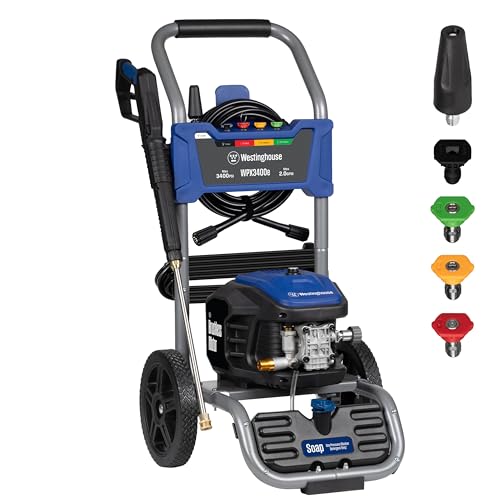
Westinghouse WPX3400e: Best Overall for Power
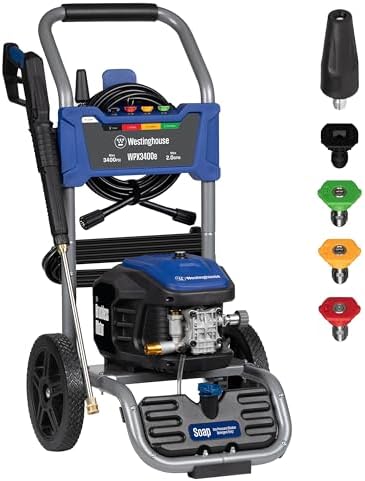
The WPX3400e is the most powerful corded model in this group. The listing shows 3400 max PSI and 2 max GPM, with 3000 PSI and 1.1 GPM as the working figures, powered by a 120V brushless motor and an axial three-piston pump that stops automatically when you release the trigger. It comes with a 25-foot super-flex hose, a metal gun and wand, five quick-connect nozzles, an onboard soap tank, 10-inch wheels, and a 35-foot GFCI cord. It costs around $375.
It is heavier than compact units and costs more, and the working flow is much lower than the max flow on the label. Skip it if you only clean a small patio or a car now and then.
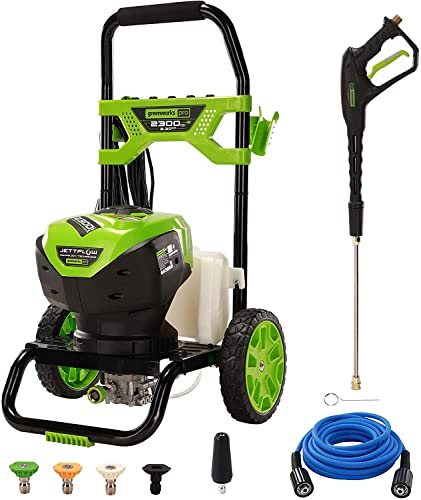
Greenworks 3000 PSI Brushless: Best for Gas-Like Performance
Greenworks pairs a 14 amp TruBrushless motor with a cast aluminum axial cam pump to reach 3000 PSI and 2.0 GPM max. The listing says the pressure and flow claims were verified by an independent lab under PWMA certification, and it highlights JettFlow technology for extra flow. The maximum inlet water temperature is 104 degrees Fahrenheit. It sells for around $340.
It is priced close to many entry-level gas washers, and its overall rating among owners is a little lower than some Westinghouse models. Skip it if you want the lightest machine possible.

Westinghouse WPX3000e: Best Mid-Range Electric
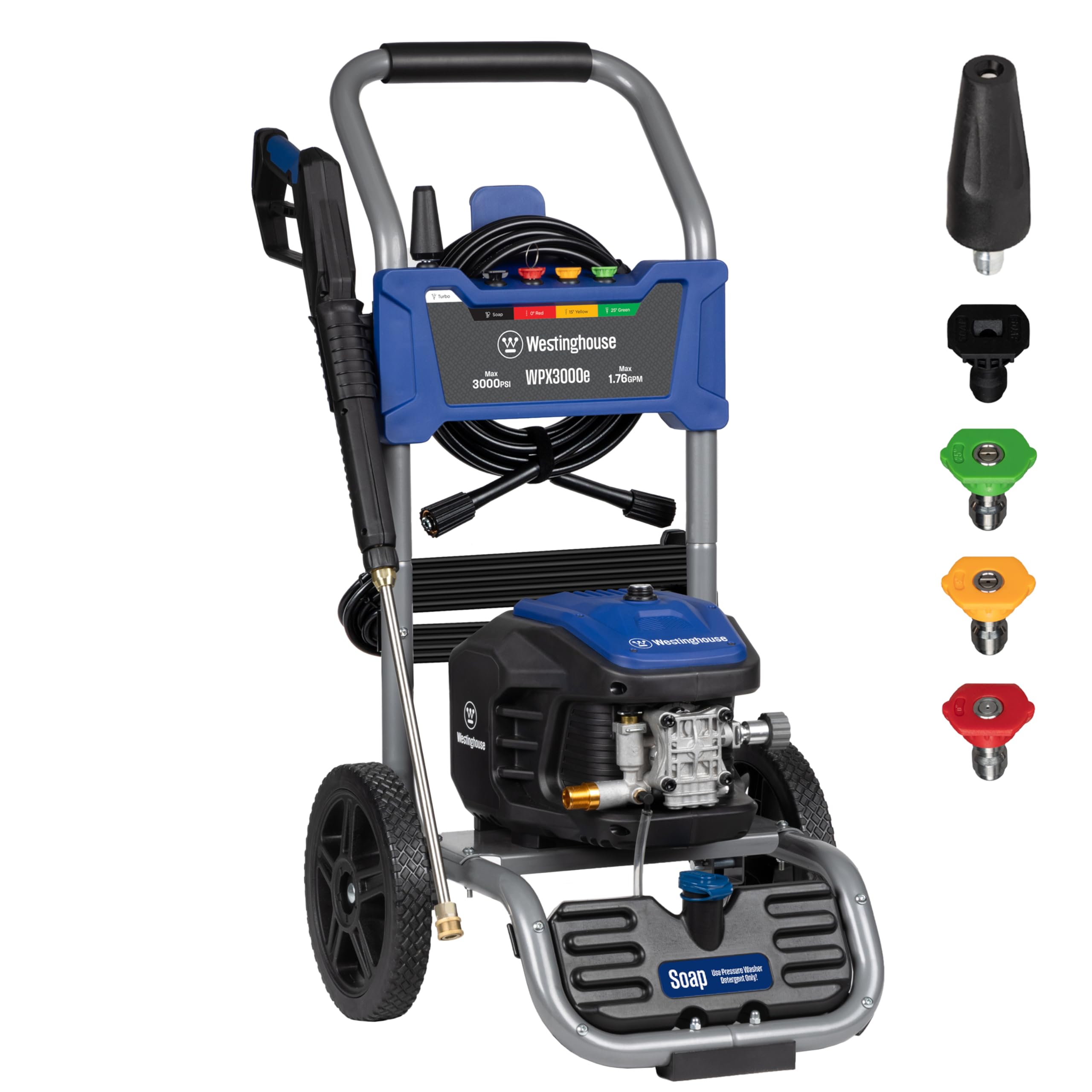
This model drops the price by about $100 while keeping most of the useful features. It lists 3000 max PSI and 1.76 max GPM (2600 PSI and 1.1 GPM working), an induction motor, a three-piston auto-stop pump, a 25-foot hose, five nozzles, an onboard soap tank, and 10-inch never-flat wheels with a 35-foot GFCI cord. The price is around $279, and it is well reviewed by owners.
The induction motor is heavier than a brushless design, which makes the machine bulkier to carry. Skip it if you must lift it into a truck bed often.

Sun Joe SPX3000: Best Budget Pick
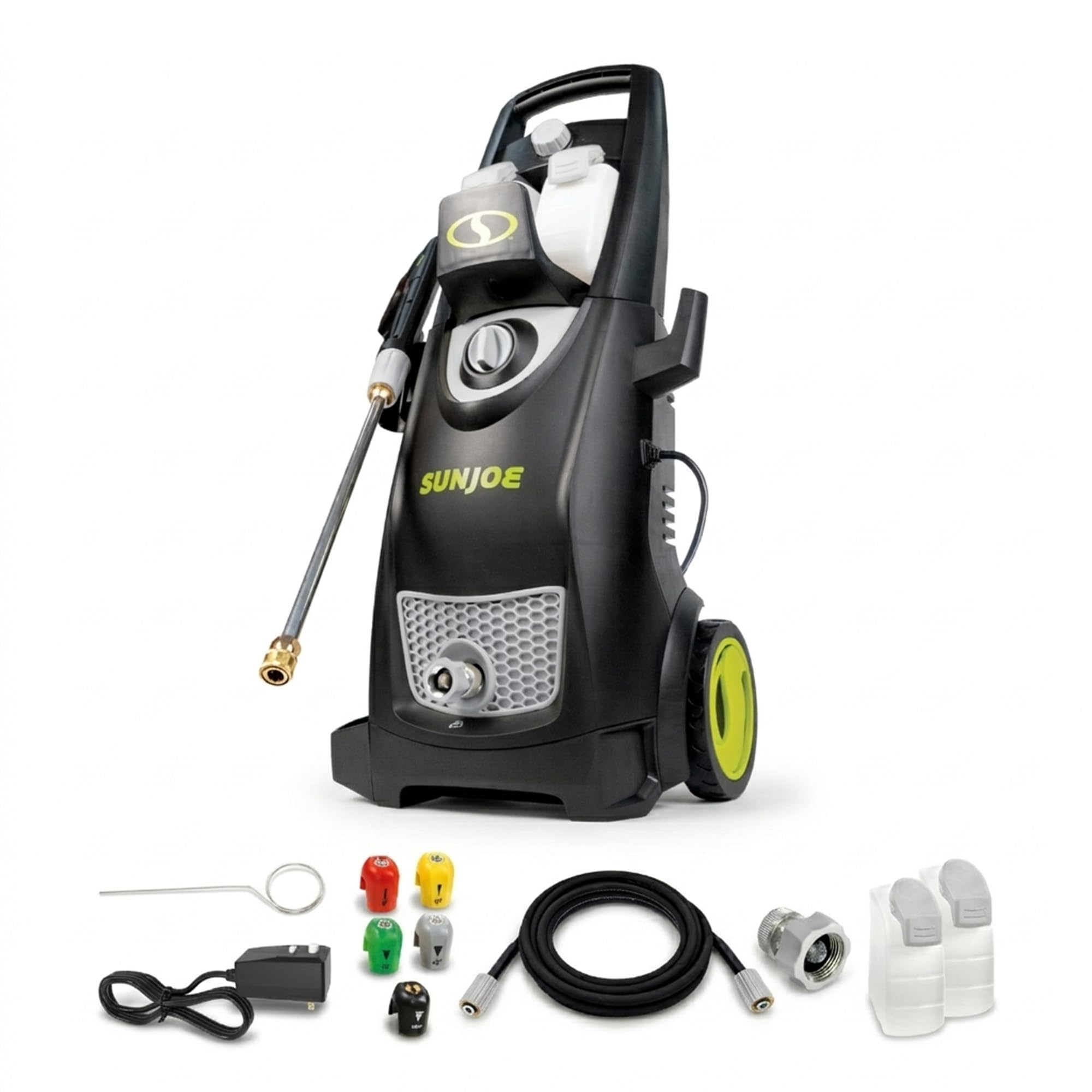
The SPX3000 is one of the most widely owned electric washers and costs around $144. The listing gives 2500 max PSI, about 2000 PSI working pressure, and 1.2 GPM, with five quick-connect tips, a 34-inch stainless steel lance, a 20-foot hose, and two 0.9 liter detergent tanks so you can keep two cleaners ready.
The hose is short, and the flow is modest, so large surfaces take time. Skip it if you want to clean a long driveway in one afternoon.

Craftsman CMEPW1900: Best for Storage Organization
The Craftsman is a straightforward 1900 PSI, 1.2 GPM corded model with an integrated soap tank and onboard storage for the nozzle, hose, cord, and wand. The 25-foot kink-resistant hose is a plus, and it is well reviewed for cars, patios, and garage floors. It costs around $189.
It is not as strong as the 3000 PSI models, so it struggles with set-in grime. Skip it if you need to strip paint or prepare large decks.

Westinghouse ePX3100: Best Lightweight Electric
At around $139, the ePX3100 delivers 2300 max PSI and 1.76 max GPM (1900 PSI and 1.24 GPM working) in a machine that weighs about 19 pounds and stands 16.5 inches tall. It includes anti-tipping wheels, a 25-foot braided hose, a 17.5-inch steel wand with five nozzles, a 20 ounce soap tank, and a pump that stops when the trigger is released.
The compact size means a smaller frame and fewer storage features. Skip it if you want a heavy-duty frame with large wheels.

Greenworks 2100 PSI: Best Simple Push-Button Washer
This Greenworks model lists 2100 PSI at 1.2 GPM, with no gas, oil, spark plugs, air filters, or pull cord, and it starts with a push button. It has a 35-foot power cord with a GFCI plug that shuts off power automatically if there is a fault. The price is around $150, and owners review it well.
It is a medium-duty tool, not a driveway stripper. Skip it if your jobs need more than about 2000 PSI.

How to Choose Electric Pressure Washers
Match the machine to the dirtiest thing you wash, and everything else gets easier. The listing numbers below explain what you are really buying.
Pressure Rating: Max PSI vs. Working PSI
Working PSI is the pressure the pump actually delivers during normal use, while max PSI is the highest figure the machine can hit under ideal conditions. Look for the working number, and treat 1500 to 2000 PSI as enough for cars and furniture, 2000 to 2800 PSI for decks and siding, and 3000 PSI or more for driveways and tough stains.
Flow Rate and Cleaning Speed
GPM controls how fast you can rinse a surface, so two washers with equal PSI can feel very different. A 2.0 GPM machine covers a driveway faster than a 1.2 GPM one, though real working flow is often lower than the max number printed on the box.
Motor Type: Brushless, Induction, or Universal
Brushless motors are efficient, quiet, and long-lasting, and induction motors are durable but heavier. Universal motors are common on light, cheap washers and tend to be louder. If you plan to run the washer often, a brushless or induction motor is the safer bet.
Hose, Cord, and Accessories
Most electric washers include a 20 to 25 foot hose and a 35-foot cord with a GFCI plug, which is a good safety feature. Because the reach is limited, extension cords must be heavy enough for the washer's amp draw, and the manual will tell you the gauge and length to use. Quick-connect tips, a soap tank, and a foam cannon are worth having, and you can compare broader options in our best pressure washers guide.
What Separates the Best Electric Pressure Washers From Cheap Ones
The best electric pressure washers share a few traits that cheaper models skip: a metal pump head, a pump that shuts off when the trigger is released, a hose with kink resistance, and a cord with a GFCI plug. These details rarely show up in the headline numbers, but they decide how long the washer lasts and how annoying it is to use.
Very cheap units often advertise huge max PSI numbers, sometimes 4000 or 5000, with very little behind them. A small household motor cannot produce that kind of pressure from a standard outlet, so treat those claims with caution and look for a believable working PSI, a named motor type, and a brand with parts and support. Certification labels such as PWMA, which the Greenworks listing mentions, are useful because they signal that an outside group checked the pressure and flow claims.
Weight and storage matter more than most buyers expect. If the washer lives on a shelf in the garage, a unit of 19 to 25 pounds is easy to carry out and put away, and onboard holders for the wand, hose, and cord keep everything together. A machine that is annoying to set up often ends up unused.
Getting Better Results From an Electric Washer
Technique often matters more than horsepower. Start with the widest tip and hold it about two feet from the surface, then move closer only if needed. Work in overlapping horizontal strokes and keep the wand moving so you do not leave lines or gouges, especially on wood and softer siding.
Apply detergent at low pressure first, let it sit for a few minutes without drying, then switch to a rinse tip and work from the top down. For decks, follow the grain, and for painted surfaces, try a small hidden spot with a wider tip before committing. Rinse the machine's hose and wand when you finish, and release the trigger pressure before disconnecting.
Electric vs. Gas and Cordless
Electric washers beat gas models on weight, noise, and upkeep, but gas models win on raw flow and freedom from outlets. If you need more power than any corded machine can give, see the best gas pressure washers. If you want to avoid cords but still need decent pressure, the best cordless pressure washers list shows battery-powered options. Car owners who mainly wash vehicles should also read the best car pressure washers picks, which favor gentle pressure and foam.
Electric units do have limits. They are designed for short bursts of use rather than all-day cleaning, and an undersized extension cord can overheat the motor. They also need a nearby outdoor outlet, and you should never run a power cord through standing water. Browse the full pressure washers category for related tools and accessories.
Safety and Care Tips
Use eye protection and closed shoes, keep the nozzle away from people and pets, and never spray at outlets, light fixtures, or electrical parts. Plug into a GFCI outlet, keep the plug and cord connections off the wet ground, and unplug the machine before changing nozzles or clearing a clog. Follow the manufacturer's manual for storage, and see our guide on how to winterize a pressure washer before freezing weather. If you are new to the tool, the steps in how to start a pressure washer walk through the first run.
Frequently Asked Questions
Are electric pressure washers strong enough for a driveway?
Yes, models in the 3000 PSI class such as the Westinghouse WPX3400e and Greenworks brushless unit can clean concrete well. Pair them with a surface cleaner attachment for even results and faster work.
Can I use an extension cord?
Often yes, but only a heavy-duty outdoor cord of the gauge and length the manual allows. A thin cord can drop voltage, overheat, and shorten the motor's life.
What is the difference between PSI and GPM?
PSI measures the force of the water, and GPM measures how much water flows each minute. High PSI removes stuck-on dirt, and high GPM rinses it away faster.
Do electric pressure washers need winterizing?
Yes, because water left in the pump can freeze and crack it. Drain the machine, follow the manual, and store it somewhere above freezing.
Conclusion
The best electric pressure washers pair a well-built pump with a brushless or induction motor and a hose and cord long enough for your yard. The Westinghouse WPX3400e is the strongest all-round pick, the Sun Joe SPX3000 is the budget leader, and the Greenworks 3000 PSI unit offers near-gas performance. Choose by working PSI and GPM, not the biggest number on the box, and check that the hose and cord reach your whole property before you buy.