Best Commercial Pressure Washers in 2026
Disclosure: We may earn a commission when you buy through links on this page, at no extra cost to you. As an Amazon Associate I earn from qualifying purchases. Learn more

The best commercial pressure washers compared by pump, flow and duty cycle for contractors and serious DIYers.
The best commercial pressure washers separate themselves from home models through the pump and the engine, not just the PSI on the box. A commercial machine should run for hours without overheating, take hard daily use on job sites and keep spare parts available, which is why triplex pumps and Honda-class engines show up so often in this category.
This guide covers the gas, electric and hot water machines worth considering for contractors, property managers and serious DIYers, with one honest limitation per pick. For the home market, see our guides to the best gas pressure washers and the best electric pressure washers.




Our Top Commercial Pressure Washer Picks
These six machines cover the main commercial needs: heavy gas power, mid-range gas value, quiet electric service and hot water for grease. Each pick lists the numbers from the listing and who should look elsewhere.
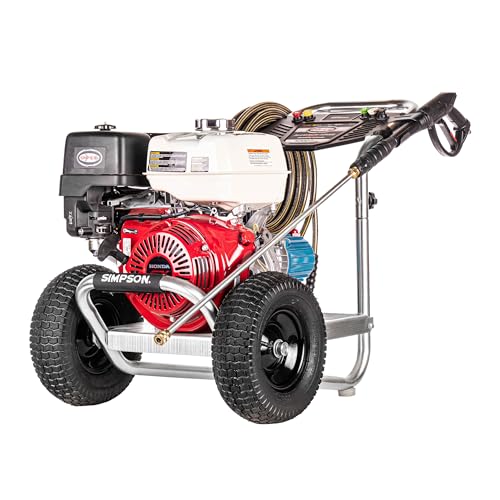
Simpson Aluminum Series 4200 PSI: best overall for daily professional use
The ALH4240 combines a Honda GX390 engine with a CAT triplex pump rated at 4200 PSI and 4.0 GPM, for around $1,348. It includes a 50-foot dual-braided Monster hose, 13-inch pneumatic tires, a professional spray gun with a safety lock-out and ceramic-coated pistons. The flow rate lets crews clean large areas quickly. It is also heavy at about 133 pounds, and the listing says it is 49-state compliant and not for sale in California. Skip it if you wash only occasionally.

NorthStar 4200 PSI Honda: best for professional gas power
The NorthStar delivers 4200 PSI at 3.5 GPM from a Honda GX390 engine, with a CAT 66DX direct drive triplex pump, thermal protection and ceramic plungers, for around $1,500. Easy Start reduces the pressure on the pull cord, and adjustable pressure lets you tune the output to the job. It costs more than the Simpson with slightly less flow and has few owner ratings. Skip it if you want the most proven model or the lowest price.

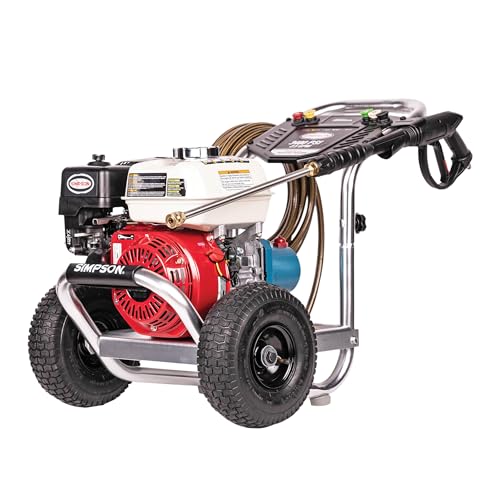
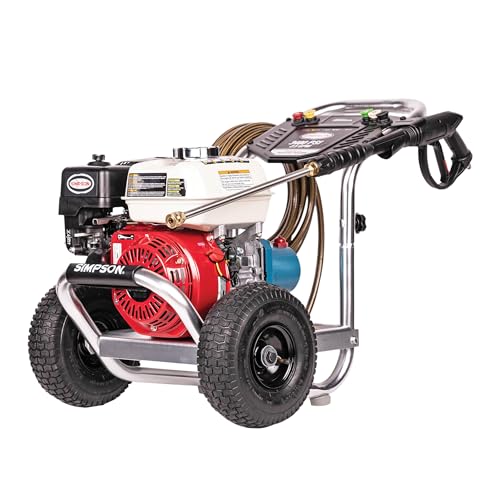
Simpson Aluminum Series 3400 PSI: best mid-size commercial gas washer
The ALH3228 uses a Honda GX200 commercial-series engine and a CAT industrial triplex pump at 3400 PSI and 2.5 GPM, for around $833. It comes with a 25-foot Monster hose, five quick-connect tips and a professional gun, on an aircraft-grade aluminum frame. It suits deck cleaning, wood restoration and contractors who want a lighter machine. At 2.5 GPM it rinses more slowly than the 4.0 GPM units. Skip it if you pressure wash large lots all day.
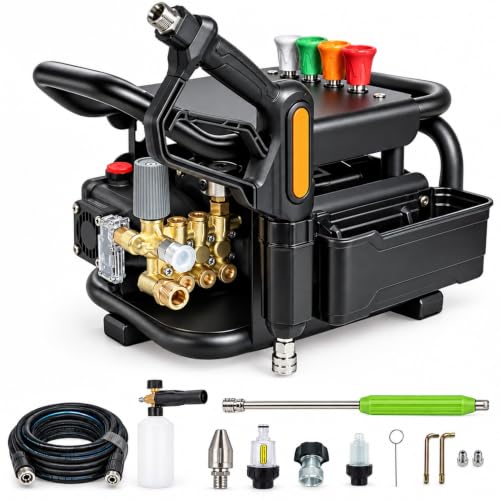
Tecoloy 2200 PSI Commercial Electric: best quiet electric machine
This wall-mount electric unit uses a 3HP permanent magnet inverter motor and a horizontal triplex pump, delivering 2200 PSI at up to 3.2 GPM, for around $399. The listing claims a 65 dB sound level, a 47-foot hose, a 40-foot power cord and operation from 90 to 120 volts, which suits garages, shops and indoor-adjacent work. It cannot match gas units for peak PSI, and it has relatively few reviews. Skip it if you need a portable job-site machine.

Powerhorse Hot Water Pressure Washer: best for grease and oil
The Powerhorse gas hot water washer pairs a Senci gas engine with an integrated diesel-fired burner, delivering 4000 PSI at 4 GPM with up to a 150 degree temperature rise, for around $3,000. Hot water breaks down grease, oil and heavy buildup faster than cold water, and the downstream detergent injection protects pump parts. It needs diesel for the burner, takes more care to run and store, and has no owner ratings yet. Skip it if your jobs do not involve grease.

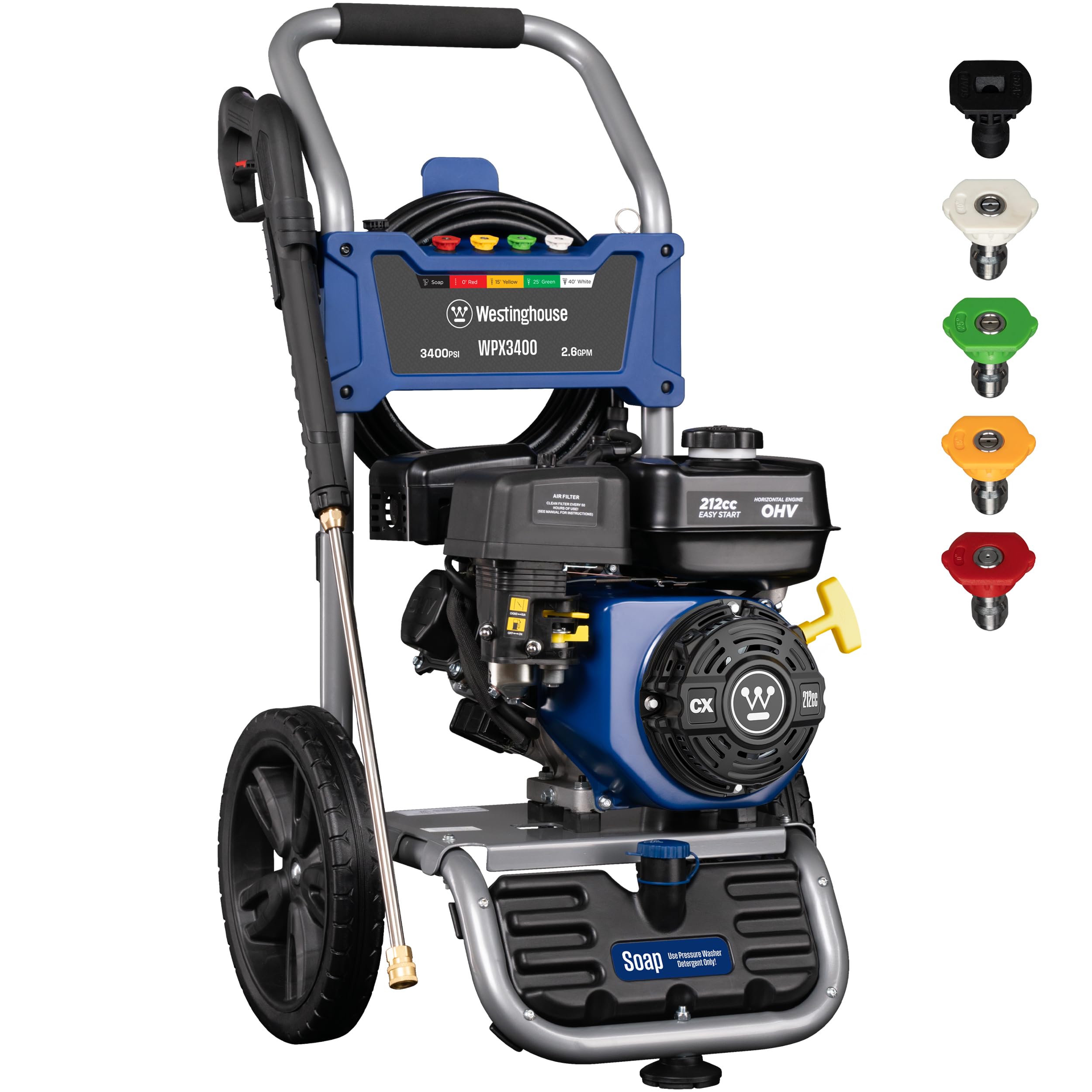
Westinghouse WPX3400: best budget gas machine for light commercial work
The WPX3400 is a 3400 PSI, 2.6 GPM gas washer with a 212cc Westinghouse OHV engine, a half-gallon onboard soap tank, a 25-foot hose and five quick-connect nozzles, for around $349. It is a well reviewed and affordable way to get gas power for occasional commercial cleaning. The axial cam pump is not built for the all-day duty cycle of a triplex pump. Skip it if you run it for hours every day.

Commercial Pressure Washers Compared
The biggest differences are pump type, flow rate and heat. Pressure (PSI) decides how hard the water hits, while flow (GPM) decides how fast you clean, and commercial users often value GPM more than PSI because it directly cuts job time.
- Triplex gas, 2.5 GPM (3400 to 3600 PSI): contractors doing decks, siding and driveways.
- Triplex gas, 3.5 to 4.0 GPM (4200 PSI): large sites and daily professional use.
- Electric commercial: shops, garages and spaces where fumes and noise matter.
- Hot water: degreasing equipment, restaurant exteriors and heavy oil stains.
Cold Water Versus Hot Water Commercial Washers
Cold water machines are cheaper, simpler and right for most cleaning, while hot water is a specialist tool. Heat helps dissolve grease and oil and speeds up cleaning of equipment and kitchens, but it adds a burner, fuel, controls and maintenance.
Most buyers should start with a strong cold water gas machine and a good detergent. Move to hot water only if grease, oil or sanitizing needs justify the extra cost. Hot water units commonly run from about $2,800 and rise quickly, so confirm you will use the heat before buying.
Other Commercial Models Worth Considering
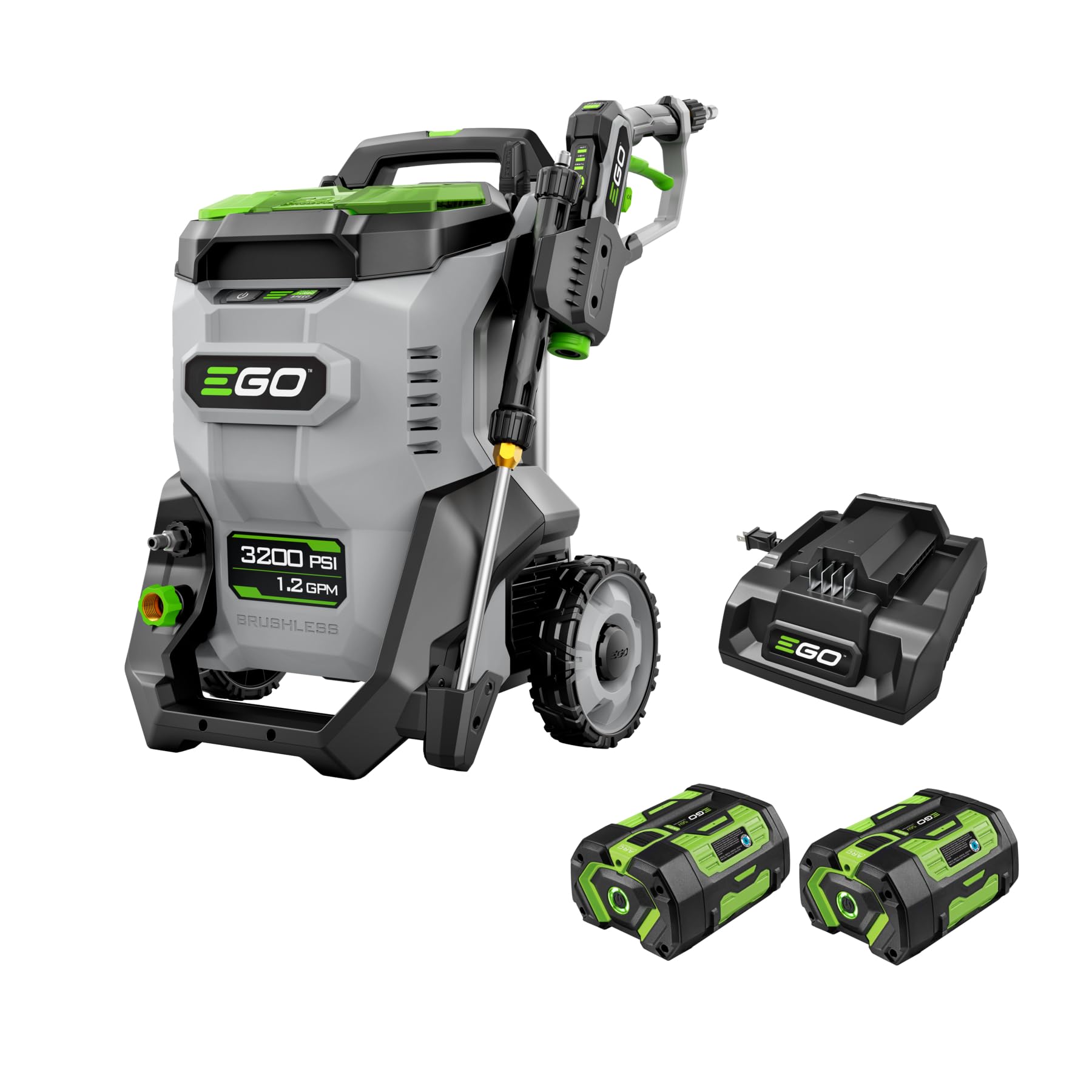
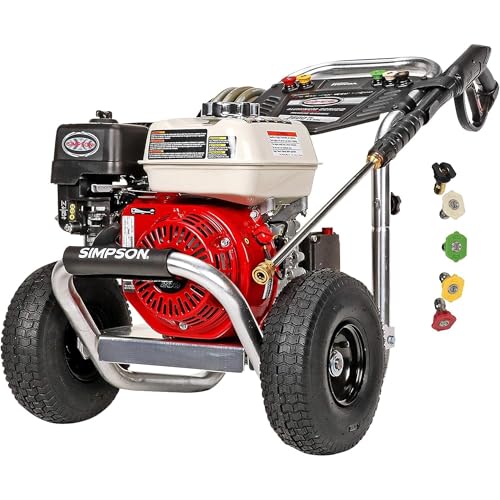
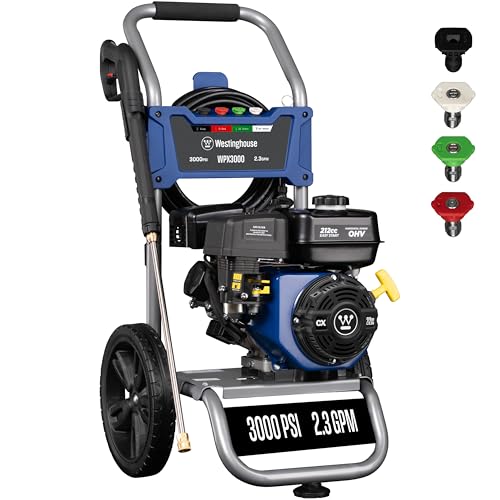
A few more machines in the table suit different needs. The NorthStar wet steam and hot water unit delivers 2,750 PSI at 2.5 GPM on 230V power with an industrial cart, for around $4,350. The EGO POWER+ HPW3204-2 is a cordless 3200 PSI washer that uses two 56V batteries, with up to 60 minutes of runtime, for around $879. It is portable, but runtime and flow limit it to lighter work. The Simpson Aluminum Series 3600 PSI is a Honda GX200 model with a 35-foot hose for around $702, and the two Westinghouse models (the WPX3000 gas for around $299 and the WPX3400e electric for around $375) cover light-duty jobs on a budget.
How to Choose a Commercial Pressure Washer
Choose by duty cycle, flow and where you will use it. A weekend user needs very different equipment from a crew that washes every day.
- Duty cycle: triplex pumps last longer under heavy daily use than axial cam pumps.
- Flow rate: higher GPM cleans faster, so favor 3.5 to 4.0 GPM for large areas.
- Engine: Honda-class engines start easily and are widely serviced.
- Hose length and weight: a 50-foot hose and large wheels help on big sites, but add weight.
- Compliance: some models are not sold in California, so check local rules.
If you are comparing against home-grade models, our general guide to the best pressure washers shows where each type fits.
Commercial Washer Safety
High-pressure jets can cut skin and damage property. Wear eye and hearing protection, gloves and non-slip footwear, keep the nozzle away from people and pets, and never aim at electrical equipment or outlets. Run gas units only outdoors, away from windows and vents, because of carbon monoxide.
Connect water and run it through the pump before starting the engine, and follow the manual for fuel, oil and storage. For a primer, see how to start a pressure washer, and before cold weather follow how to winterize a pressure washer.
Buy or Rent a Commercial Washer
Renting makes sense for a one-off project, while buying pays off if you wash several times a month. A rental unit gives you the right machine for a single weekend, but daily rates add up quickly, and you work to the rental store's schedule. If you pressure wash for a business, the cost of a mid-range gas model is usually recovered within a handful of jobs.
Buying also means you know the machine's history and can keep spares on hand. Whichever route you choose, match flow and pressure to the surfaces you actually clean instead of renting the biggest machine on the shelf.
Attachments That Speed Up Commercial Jobs
The right attachment can cut a day's work in half. A surface cleaner is the standout for parking lots, sidewalks and loading areas, because it cleans flat concrete evenly without the stripes a bare wand leaves. An extension wand and a gutter or siding nozzle reach higher areas without a ladder, and a downstream soap injector or foam tool lets you apply detergent at low pressure before rinsing.
Make sure the attachment is rated for the PSI and GPM of your machine and uses the same fitting size, and match flow to the attachment: a surface cleaner needs enough GPM to keep its nozzles working, which is another reason higher-flow machines are popular for commercial use.
Keeping a Commercial Washer Running
A commercial machine rewards routine care. Check engine oil and fuel before each use, and look over the hose, gun and fittings for leaks or cracks. Change engine oil and the air filter on the schedule in the manual, and use fresh fuel with a stabilizer if the machine sits.
Many triplex pumps need periodic pump oil changes, though some listings describe them as maintenance-free, so follow the manufacturer's instructions for the model you buy. After each job, release pressure, drain the hose and store the machine somewhere dry and above freezing. Never let the pump run dry or dead-head against a closed gun for more than a short moment, since heat builds quickly and damages seals.
Detergents and Water Supply
A commercial washer is only as good as its water supply and soap. Make sure your garden hose and spigot can deliver at least the GPM the machine needs, because a starved pump cavitates and wears out fast. Use detergents made for pressure washers and match them to the surface, such as degreaser for oily concrete and a mild cleaner for painted siding.
Frequently Asked Questions
What makes a pressure washer commercial grade?
Commercial machines use triplex plunger pumps, commercial-series engines and sturdier frames designed for daily use. They also offer higher flow rates, so jobs finish faster.
Is 4000 PSI too much for most jobs?
Often yes. Most residential and commercial cleaning works well at 3000 to 3600 PSI. Extra pressure helps with stripping and heavy concrete, but it risks damage on wood and soft surfaces.
Do I need a hot water pressure washer?
Only if you remove grease, oil or similar buildup regularly. Cold water with the right detergent handles most dirt, so hot water is an investment for specialist work.
Can an electric washer be commercial?
Yes, for indoor-adjacent and shop use where noise and fumes matter. Electric models like the Tecoloy give up peak pressure for quieter, cleaner operation.
Final Thoughts on the Best Commercial Pressure Washers
For heavy daily work, the Simpson ALH4240 and NorthStar 4200 PSI units lead the field, the ALH3228 suits contractors who want a lighter machine, and the Westinghouse WPX3400 is the sensible budget entry. Whichever you choose, the best commercial pressure washers are the ones that match your duty cycle, flow needs and budget. Browse the pressure washer category for more options.