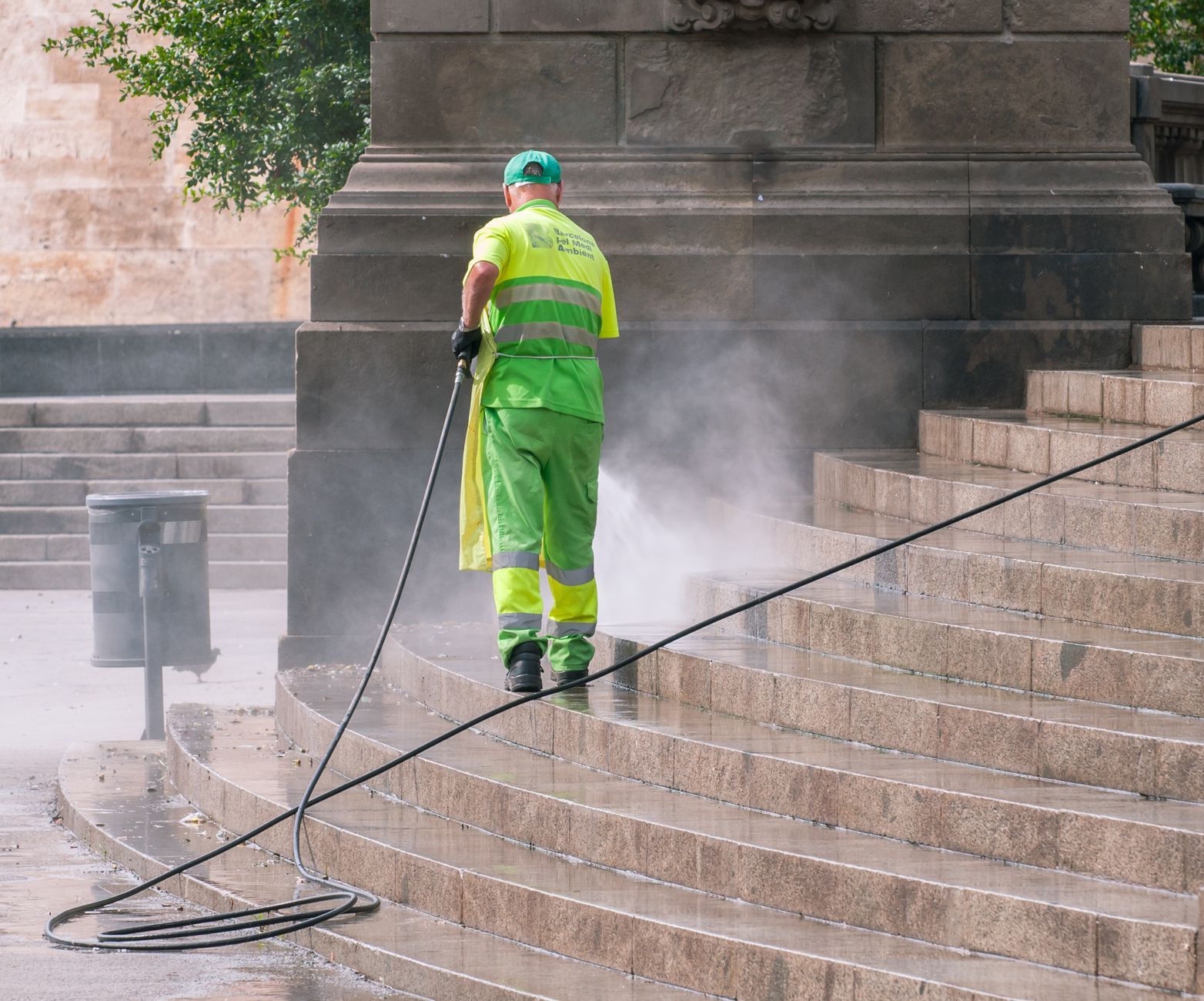
Best Greenworks Pressure Washers in 2026
Disclosure: We may earn a commission when you buy through links on this page, at no extra cost to you. As an Amazon Associate I earn from qualifying purchases. Learn more

The best Greenworks pressure washers compared by power, flow and price so you can match one to your jobs.
The best Greenworks pressure washers cover a wide range, from a 1500 PSI hand-carry unit for cars and patio furniture to a 3000 PSI brushless machine that handles driveways. Greenworks builds electric and battery washers only, so you will not find gas engines, pull cords or oil changes in this lineup.
Below are the current models worth considering, what the listings say about each one, and a clear limitation for every pick. If you want to compare across brands first, start with our best pressure washers guide.

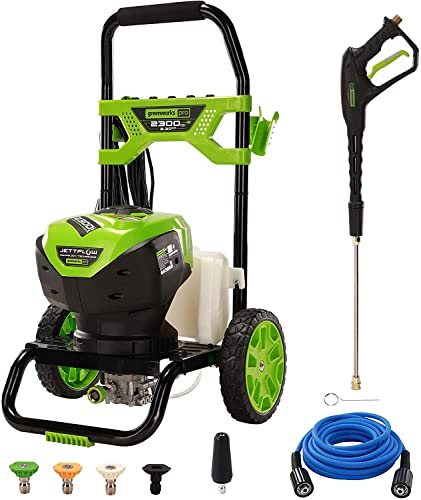


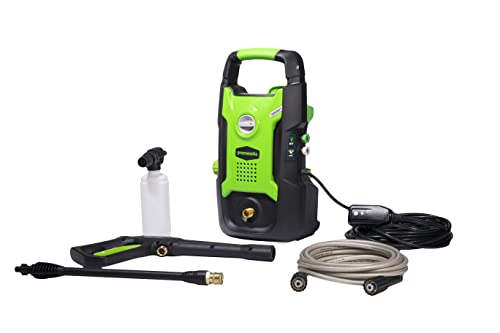

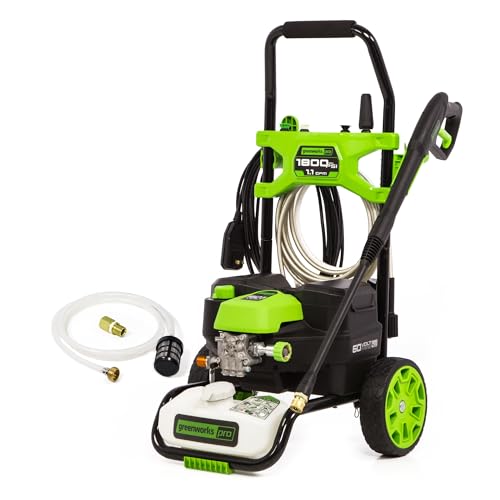


Our Top Greenworks Pressure Washer Picks
These six models cover most households, from light washing to heavy driveway work. Each one lists what it offers and who should look elsewhere.
Greenworks 3000 PSI Brushless: best overall
This 3000 PSI (max), 2.0 GPM model uses a 14-amp TruBrushless motor and sells for around $316. The listing highlights JetFlow technology, a metal spray gun, a 25-foot kink-resistant hose, a 35-foot GFCI cord and five tips (15, 25 and 40 degrees, soap and turbo). It is the most capable corded model here. It is also heavier and costs more than the entry models. Skip it if you only wash cars and furniture.

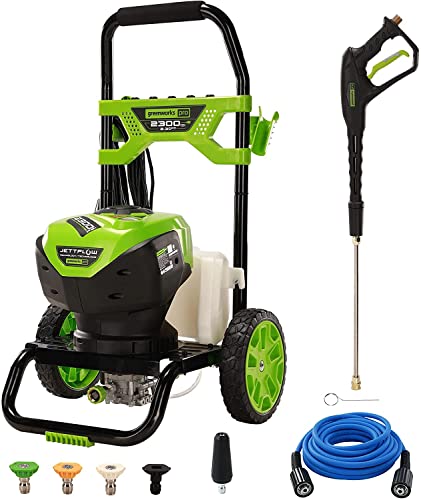
Greenworks 2300 PSI (2.3 GPM): best for fast rinsing
The 2300 PSI model stands out for water flow: 2.3 GPM max, which moves dirt off a surface faster than the 1.2 GPM class. It has a brushless motor with Smart Flow pressure sensing, a 25-foot kink-resistant hose, 10-inch wheels and an inline GFCI cord, for around $364. The drawback is that it costs more than the 3000 PSI model while offering lower peak pressure. Skip it if you want the highest PSI for stained concrete.
Greenworks 80V 3000 PSI Dual-Port: best cordless
This battery-powered unit delivers 3000 PSI at 2.0 GPM with a TruBrushless motor and includes a self-priming siphon hose, so you can draw water from a bucket or tank, for around $427 (tool only). That makes it useful far from an outlet. Because it is sold tool-only, you need to own or buy the 80V batteries and charger, which adds cost. Skip it if you do not already use Greenworks 80V tools. For other battery models see our guide to cordless pressure washers.

Greenworks 2100 PSI (1.2 GPM): best mid-range value
The 2100 PSI model suits fences, decks, patios and small driveways, at around $150. It starts with a push button, has a 35-foot cord with a GFCI plug, a 20-foot tangle-free hose, a telescoping handle and four accessories (25 and 40 degree nozzles, turbo and soap applicator). It is a 1.2 GPM washer, so large areas take longer. Skip it if you need a bigger flow rate.

Greenworks 1500 PSI Upright Hand-Carry: best compact option
This PWMA-certified washer delivers 1500 PSI at 1.2 GPM, can be used vertically or horizontally, and costs around $140. It has a 20-foot hose, a 35-foot GFCI cord, a soap applicator and an attachable detergent bottle. Its limitation is low power: it is for light work such as bikes, grills and outdoor furniture. Skip it if you have a deck or driveway to clean.

Greenworks 1900 PSI (1.2 GPM): best budget pick
The 1900 PSI model is a light-duty residential washer for cars, boats, RVs, patio furniture and windows, for around $120. It has a push-button start, a 35-foot GFCI cord, a 20-foot hose and a gun with 25 and 40 degree nozzles, a turbo nozzle and a soap applicator. It has less power than the models above, so heavily stained concrete is out of its league. Skip it if you want one washer for every job.

Greenworks Pressure Washers Compared
The main differences across the lineup are pressure, flow and motor type. Greenworks rates pressure in PSI and flow in GPM, and the two together decide how fast a job goes. A 2.0 to 2.3 GPM washer rinses visibly faster than a 1.2 GPM one at similar pressure.
- Light duty (1500 to 1900 PSI): cars, outdoor furniture, bikes, grills.
- Medium duty (2000 to 2300 PSI): fences, siding, decks, patios.
- Heavy duty (3000 PSI max): concrete, driveways, heavy buildup.
Several models carry PWMA certification, which means the pressure and flow claims were verified under an industry standard. That is a useful signal when comparing headline numbers across brands.
Brushless Motors and Why They Matter
A brushless motor runs cooler, quieter and with less wear than a brushed one, which usually means a longer working life. Greenworks markets its TruBrushless motor on its higher-end models, and you will see it on the 3000 PSI and 2300 PSI units above. For occasional use a basic motor is fine, but if you plan to clean a house and driveway every season, the brushless models are worth the extra money.
Pump design matters too. The 3000 PSI listings mention a cast aluminum axial cam pump, which is a more durable design than the plastic pumps found on many bargain washers. Check the pump description before buying, especially if the machine will see regular use.
How to Choose a Greenworks Pressure Washer
Start with the surface you clean most, then work out whether you need a cord. Buying more power than you need can damage wood and soft siding, while buying too little means long, frustrating sessions.
- Match PSI and GPM to the task: light jobs need 1500 to 1900 PSI, decks and siding fit 2000 to 2300 PSI, concrete needs the 3000 PSI class.
- Check the hose and cord length: most models include a 20 to 25-foot hose and a 35-foot GFCI cord, so confirm they reach from your spigot and outlet.
- Look at the nozzle set: several tips and a soap applicator give much more control than a single wand.
- Consider storage: compact and upright models fit on a shelf, while wheeled models are easier to move around a yard.
If you want to compare electric options from other makers, see our best electric pressure washers roundup. If you need still more power, take a look at gas pressure washers.
Greenworks Pressure Washer Safety and Care
Even a small electric washer can injure skin and damage surfaces. Wear eye protection and closed shoes, keep the spray away from people, pets and electrical outlets, and use only a GFCI-protected outlet. Follow the manufacturer's manual for setup and storage.
After use, release the pressure, disconnect the hose, drain the pump and store the washer indoors. Before cold weather, follow how to winterize a pressure washer so trapped water cannot freeze and crack the pump. If you are setting up a washer for the first time, our guide on how to start a pressure washer walks through the steps.
Greenworks Accessories and Add-Ons
Quick-connect fittings make it easy to add attachments. A surface cleaner speeds up flat concrete, a foam cannon makes washing vehicles easier and an extension wand reaches higher siding from the ground. Always confirm the fitting type on your model before buying, because older and newer lines sometimes differ.
Use detergent made for pressure washers and apply it at low pressure with the soap nozzle. Household cleaners can foam badly or damage the pump seals.
Which Greenworks Washer Fits Which Job
Matching the washer to the task saves money and protects your surfaces. Here is a quick way to sort the lineup by what you actually plan to clean.
- Cars, bikes and patio furniture: the 1500 PSI hand-carry or 1900 PSI model is plenty, and a soap applicator or foam attachment helps.
- Fences, decks and siding: the 2100 PSI model or the 2300 PSI model gives enough power with a wide fan tip, and the higher flow of the 2300 PSI unit rinses faster.
- Driveways, walkways and stained concrete: the 3000 PSI brushless model is the better fit, ideally with a surface cleaner attachment.
- Places without power: the 80V cordless unit with its siphon hose can pull water from a bucket or tank.
Whatever you pick, begin with the widest tip and move to a narrower one only when needed. A narrow tip held close can scar wood, strip paint and etch soft stone.
Corded Versus Cordless Greenworks Washers
Corded washers are cheaper and give unlimited runtime, while cordless ones give freedom of placement. The 80V model delivers the same 3000 PSI rating as the corded flagship, but it needs batteries that you buy separately. The listing for the hybrid 60V unit adds a twist: it can run from a cord or from two 60V batteries, and it includes a siphon hose.
If you already own Greenworks batteries, a cordless washer is a natural fit. If you do not, a corded model is usually the better value because the battery pack can cost as much as the washer itself.
Common Mistakes When Using an Electric Washer
A few simple habits prevent most pump failures and bad results. These apply to every model in this guide.
- Starting without water: connect the garden hose, open the tap fully and squeeze the trigger until water flows steadily before powering the motor.
- Holding the nozzle too close: keep a distance of about two feet at first and adjust from there.
- Using a thin extension cord: use the supplied cord or a heavy-duty outdoor-rated one to avoid overheating.
- Forgetting to drain the pump: water left inside can freeze and crack internal parts over winter.
Frequently Asked Questions
Which Greenworks pressure washer is strongest?
The 3000 PSI brushless corded model and the 80V cordless 3000 PSI model are the strongest listed here. Both are rated at 2.0 GPM. The corded unit is cheaper because the battery model is sold without batteries.
Can a Greenworks washer clean a driveway?
Yes, but pick a higher-power model. The 3000 PSI and 2300 PSI units are better for concrete than the 1500 to 1900 PSI machines, and a surface cleaner attachment will speed up the job.
Are Greenworks pressure washers gas or electric?
All the models in this guide are electric, either corded or battery powered. That means no fuel, no engine upkeep and quieter operation than gas machines.
Do Greenworks washers need a special outlet?
They run on standard 120V household power and include a GFCI plug on the cord. Use an outdoor-rated outlet and avoid long, thin extension cords.
Final Thoughts on the Best Greenworks Pressure Washers
For power, the 3000 PSI brushless model is the top pick, the 2100 PSI unit is the best value, and the 1900 PSI washer is the cheapest way into the brand. Whichever model you choose, the best Greenworks pressure washers are the ones that match your surfaces, your outlet and your budget. Browse the full pressure washer category for more ideas.