How to Pressure Wash a Deck
Disclosure: We may earn a commission when you buy through links on this page, at no extra cost to you. As an Amazon Associate I earn from qualifying purchases. Learn more

A step-by-step guide to how to pressure wash a deck safely, from prep and cleaner to technique and sealing.
Learning how to pressure wash a deck is mostly about restraint: the right nozzle, a safe distance, and a steady hand matter more than raw power. Done well, it lifts away gray weathering, algae, and ground-in dirt in an afternoon. Done badly, it leaves fuzzy wood, furrows, and lap marks that are far harder to fix than the dirt was.
This guide walks through the full job, from clearing the deck to sealing it, and flags the mistakes that cause most of the damage. If your machine is not running yet, read how to start a pressure washer first.
What You Need Before You Start
You need a pressure washer, a wide fan tip, a deck cleaner, a soft brush, and basic protective gear. The machine matters less than the nozzle you put on it, because a gentle spray pattern is what protects the boards.
- An electric or gas pressure washer with a wide fan tip (a 25 or 40 degree tip is the usual choice for wood) and a soap nozzle or detergent tank.
- A deck cleaner made for your surface (wood and composite often need different products).
- A stiff but non-wire brush or a long-handled deck brush for stubborn spots.
- Safety glasses, closed-toe waterproof shoes, and gloves.
- A garden hose, a broom, and plastic sheeting for nearby plants.
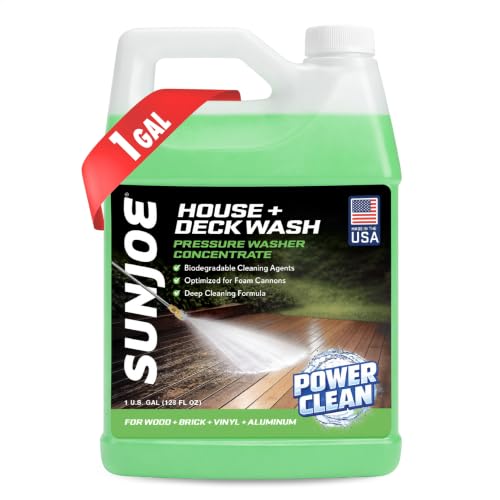
A concentrated cleaner such as the one below is easy to dilute and works through a soap nozzle or a brush. Always follow the label and your washer's manual for dilution and application.
Sun Joe House and Deck Cleaner: best for a general wood or composite wash
This bleach-free, all-purpose concentrate is sold in a one-gallon jug and is made for use with pressure washers, or with a brush or mop. The listing says it works on wood, vinyl, aluminum, and brick, and can prep a surface for staining. The main limitation is that it is a general cleaner, so it will not remove heavy mildew or old stain on its own. Skip it if your deck is badly blackened and needs a dedicated wood brightener or stripper.

Prepare the Deck and the Area
Preparation takes about as long as the washing and prevents most of the problems. Start by moving furniture, grills, and planters off the deck, then sweep away leaves and loose grit.
Walk the whole surface and look for raised nail heads, loose screws, and splintered boards. Hammer or drive fasteners down, and replace anything rotten, because a strong stream can tear up soft wood. Wet down nearby plants with a hose and cover delicate ones with sheeting so cleaner does not burn the leaves. Keep children and pets away from the area until you are finished.
Check where water will go. Gas units must stay outdoors in open air (never in a garage or enclosed porch) because of carbon monoxide, and electric units should be plugged into a GFCI outlet with the cord kept off wet decking. Never aim the spray at outlets, light fixtures, or the electrical panel.
Apply Cleaner and Let It Work
Cleaner does the heavy lifting, so apply it before you spray. Wet the deck lightly with the hose, then apply the diluted cleaner with the soap nozzle, a pump sprayer, or a brush, working in sections you can finish before the product dries.
Let it dwell for the time on the label, usually several minutes. Keep the surface damp if the sun is strong, and do not let any section dry out. Scrub heavily soiled areas, boards under planters, and the spots near stairs with the brush, moving along the grain. Many deck products can be mixed or applied incorrectly, so read the label and never combine different cleaners.
How to Pressure Wash a Deck Without Damaging the Wood
The safest technique is a wide fan tip, a moderate distance, and long strokes that follow the grain. Start with the nozzle about 18 to 24 inches from the boards and move closer only if the dirt stays put. Pointing a narrow tip at soft wood is the fastest way to leave gouges.
- Pick a hidden spot, such as a board near the house, and rinse a small patch to see how the wood reacts. If it fuzzes or darkens, back off further or reduce pressure.
- Hold the wand at a slight angle, with the tip pointing along the length of the board rather than across it.
- Move in smooth, overlapping passes at an even speed. Do not pause in one spot, and do not start or stop the spray while it is pointed at the wood.
- Work from the top of the deck toward the edges and stairs so dirty water runs away from clean boards.
- Rinse everything with plain water, including railings and spindles, working from the top down.
Stand on dry footing if possible, because wet deck boards turn slick with cleaner on them. Keep the spray away from your feet, other people, and animals. Railings and balusters often need a lower, wider spray than the floor, as the wood is thinner and the finish is usually older.
Dry, Inspect, and Seal
Let the deck dry fully before sealing, usually a day or two in mild weather, longer in shade or humidity. Press a hand on several boards and look for dark, damp patches. A moisture meter helps if you have one, though it is not required.
Once dry, sand any raised grain lightly, sweep, and apply a stain or sealer that suits your wood type and climate. Following the product's recommended dry time before putting furniture back is important, since a tacky finish picks up dirt and prints. Most decks benefit from a yearly check and a fresh coat on a schedule suggested by the product. Between washes, a light sweep and a quick rinse keep buildup from setting in.
If your hose starts leaking or bulging midway through the job, stop and read how to repair a pressure washer hose before you continue.
Common Mistakes to Avoid
Most deck damage comes from the same few habits. Avoid these and your results will look far better:
- Using a zero degree or narrow tip, which cuts into the wood.
- Holding the nozzle too close, especially at board edges and end grain.
- Skipping the pre-rinse and cleaner, then compensating with extra pressure.
- Washing in direct midday sun, so cleaner dries before you can rinse it.
- Sealing wood that is still damp, which traps moisture and causes peeling.
Special Cases: Stairs, Railings, and Stubborn Stains
Stairs, railings, and stained areas need a slightly different approach. Work stairs from the top step down, and keep your footing firm by standing on a dry step or on the ground beside the stairs. Railings and balusters are thinner than the floor boards, so use the widest tip and stay a bit farther back.
For black mildew, rust marks from fasteners, or grease from a grill, spot-treat before the main wash. Mildew usually responds to the same deck cleaner left to dwell a little longer, while rust and grease may need a dedicated stain remover that is safe for your decking. Always follow the label, wear gloves and eye protection, and rinse thoroughly so no residue is left to stain the boards or harm nearby plants.
If the old finish is peeling or the wood is graying badly, a cleaner alone may not be enough. A wood brightener or a stripper (used exactly as the label directs) can restore an even color before you stain, and a light sanding afterward smooths any raised grain.
FAQ
What pressure is safe for a wood deck?
Lower is safer, and the nozzle matters as much as the number. Softer woods such as cedar and pine need a gentler setting and a wide fan tip, while harder woods tolerate a bit more. Check your washer's manual and the decking maker's guidance, and always begin on a hidden board.
Can I pressure wash a composite deck?
Yes, usually, but composite boards can be scarred by close, strong spray. Keep a wider tip and more distance, follow the decking manufacturer's cleaning instructions, and use a cleaner made for composites if staining is a problem.
Do I need to use deck cleaner?
For anything beyond light dust, yes. Cleaner breaks down algae, mildew, and grime so you can use less pressure. Without it, you tend to hold the nozzle closer, which risks damage.
How often should I wash my deck?
Once a year is enough for most decks, with spot cleaning as needed. Shaded or damp decks may need more frequent attention because algae returns faster there.
With the right tip, steady passes, and a good cleaner, how to pressure wash a deck becomes a straightforward weekend job. For more machines and accessories, browse our pressure washers section, or read our guide to how to wash a car with a pressure washer for another practical use of the same tool.