How to Clean and Maintain the Blade of Your Garden Saw
Disclosure: We may earn a commission when you buy through links on this page, at no extra cost to you. As an Amazon Associate I earn from qualifying purchases. Learn more

How to clean and maintain the blade of your garden saw: sap removal, rust care, and a quick routine.
Learning how to clean and maintain the blade of your garden saw is mostly a matter of removing sap and moisture soon after each job. Sticky resin makes the teeth drag and bind, and a damp blade begins to rust within days. A few minutes of care after cutting keeps the saw working smoothly and extends its life.
This guide focuses on the blade itself: cleaning off sap and resin, drying, protecting against rust, and checking for damage. For filing the teeth, see how to maintain and sharpen your garden saw, and for keeping the whole tool in good shape between seasons, see how to store and maintain your garden saw.
Why Blade Cleaning Matters
A clean blade cuts faster, with less effort, and with less risk. When sap and wood dust build up on the teeth and sides of the blade, the saw drags, it wanders from the cut line, and you push harder to compensate. That extra force is how slips and ragged cuts happen.
Moisture and acidic sap also attack the steel. Rust pits the blade surface, rough patches create friction, and the teeth lose their edge more quickly. Regular cleaning is cheaper than replacing blades, and it is a good habit with any hand saw.
What You Need
You need only a few simple items. Put them together in a small kit and keep it where you store the saw.
- Cut-resistant gloves and safety glasses.
- A stiff nylon brush, a toothbrush, or a soft wire brush for tough spots.
- A sap or resin cleaner, or rubbing alcohol, or a citrus-based solvent.
- Clean rags or paper towels.
- A light protective oil, for example a machine oil or a tool lubricant.
Some gardeners use a purpose-made tool cleaner that handles sap and rust prevention in one step.
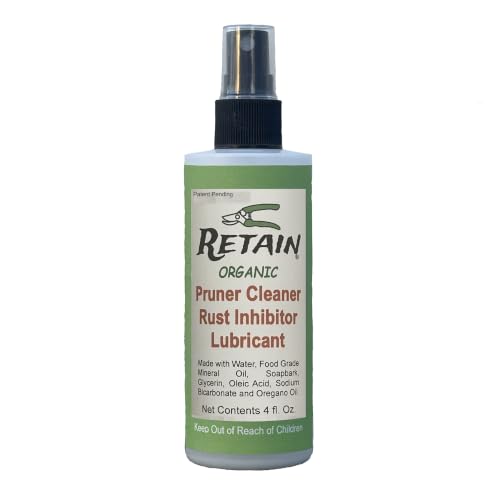
RETAIN Pruning Tool Cleaner and Lubricant: best for removing sap and protecting the blade
This 4 ounce garden tool treatment is sold as a sap and resin remover with lubrication and rust prevention. The listing states it contains no bleach or alcohol and uses oregano oil, and that it is registered for use in organic agriculture. The main limitation is that it is a small bottle with relatively few ratings so far. Skip it if you already have a solvent and oil you like.

How to Clean and Maintain the Blade of Your Garden Saw Step by Step
Work with the blade open and locked, or removed if the design allows, and always keep your fingers clear of the teeth. Wear gloves, because even a dull saw can cut skin.
- Brush off loose sawdust and dirt from both sides of the blade, moving from the spine toward the teeth, never along them toward your hand.
- Apply a sap remover or solvent to a rag, and wipe the flat sides of the blade. Let it soak for a minute on sticky patches.
- Use a small brush to work between the teeth, brushing away from you.
- Wipe the blade clean with a fresh rag and check that no residue remains.
- Dry it completely, including the pivot area on a folding saw.
Avoid soaking handles that are made of wood, and do not leave a blade sitting in solvent. For folding saws, put a drop of oil on the pivot and work it open and closed a few times so the lock stays smooth.
Remove Rust and Light Pitting
Surface rust can usually be removed with a little patience. Rub the stain gently with a fine abrasive pad or a soft brush and a little oil, working in the direction of the blade, then wipe off the residue and dry it.
Do not use coarse abrasives or a power wire wheel on the teeth, because they round off the edges and remove metal. If the blade has deep pits, a bend, or cracks, it should be replaced rather than repaired. A blade that is cracked or kinked can break during a cut, and a damaged blade is not worth the risk.
Protect the Blade After Cleaning
A thin film of oil is enough to keep rust away. Place a few drops on a rag and wipe the blade lightly on both sides, leaving a barely visible layer. Too much oil collects dust and drips on stored items.
Before you put the saw away, check the blade for a few simple things: loose or missing teeth, a bent section, a loose handle or pivot, and a tight lock. If the saw cuts poorly even when clean, the teeth probably need attention, and the file steps in how to maintain and sharpen your garden saw will help. If you want a different tool for large limbs, read about how to prune trees with a garden saw.
Build a Quick Habit
The simplest routine is a thirty-second wipe after every cutting session. Brush, wipe, dry, and oil lightly. For heavy sap, such as pine, spruce, or fresh green wood, clean sooner and more thoroughly, because sticky resin hardens quickly.
Better still, choose the right blade for the wood you cut, since coarse teeth clear dust and sap more readily. Our tips for choosing the right blade for your garden saw explains how tooth shape affects cleaning and cutting. Browse the full saws category for more tools.
Cleaning Different Saw Types
The method changes a little with the type of saw. Folding pruning saws need extra attention at the pivot, where sap and dirt gather and stiffen the lock. Open and close the blade a few times after cleaning, and apply a tiny drop of oil to the joint.
Bow saws and frame saws have a thin, tensioned blade, so ease off the tension before a deep clean if the maker allows it, and take care not to bend the blade. Pole saw blades, which spend time near the ground and in wet foliage, collect more dirt and sap, so wipe them after each use and look closely at the mounting hardware. Hand saws with wooden handles should be wiped, not soaked.
If the teeth are dull after a clean, move on to filing or replacement, as covered in the sharpening guide, and keep the saw safe between jobs by following our storage advice. For general safe use, see how to ensure safety while using a garden saw.
Cleaning Mistakes That Damage the Blade
Some shortcuts do more harm than good. Avoid these habits, because they shorten the life of the blade.
- Scraping sap with a knife or screwdriver, which nicks the teeth and scratches the steel.
- Using a power wire wheel, which rounds off the cutting edge.
- Leaving the blade wet or sealed in a damp sheath.
- Soaking the whole saw, including the handle and pivot, in solvent.
- Skipping gloves and eye protection when brushing the teeth.
If you cut sticky wood often, keep a small brush and a rag with the saw so it is quick to clean on the spot. Short, regular cleaning beats a long scrub once the resin has hardened.
FAQ
What is the best way to remove tree sap from a saw blade?
Use a sap remover, rubbing alcohol, or a citrus solvent on a rag, let it soften the resin, and brush it off. Dry the blade and apply a light oil afterward.
Can I wash my garden saw blade with water?
You can rinse it, but you must dry it fully right away. Leftover water causes rust, particularly at the pivot of a folding saw.
How often should I clean the blade?
After every use is ideal, and always after cutting resinous or green wood. A quick wipe is enough for dry, clean cuts.
Is a rusty saw blade still safe to use?
Light surface rust can be cleaned off. A blade with deep pits, cracks, or bends should be replaced, as it can fail during use.
Keeping up with how to clean and maintain the blade of your garden saw takes minutes and pays off in cleaner cuts and a longer-lasting tool.