How to Ensure Safety While Using a Garden Saw
Disclosure: We may earn a commission when you buy through links on this page, at no extra cost to you. As an Amazon Associate I earn from qualifying purchases. Learn more

How to ensure safety while using a garden saw, with the gear, footing and cut planning that prevent common injuries.
Knowing how to ensure safety while using a garden saw is what keeps a routine pruning job from ending in a trip to urgent care. Hand saws look harmless, yet sharp teeth, awkward positions and falling limbs cause plenty of cuts and bruises every season.
This guide covers protective gear, safe footing, how to handle the blade, how to manage the cut so branches do not fall on you, and when to put the saw down and call a professional.

How to Ensure Safety While Using a Garden Saw: Wear the Right Gear
Gloves and eye protection are the minimum for any cut. Sawdust and bark chips fly up, and a springy branch can whip back into your face when it releases.
- Safety glasses or goggles that wrap around the eyes.
- Snug work gloves with a good grip. Leather or reinforced synthetic gloves resist scrapes and thorns.
- A hard hat when you cut overhead, since falling twigs and limbs can be heavy.
- Long sleeves, long pants and closed shoes with grip. Steel toe boots are worth it for log work.
Browse our accessories and safety section for gloves, glasses and other gear.
Check the Saw Before You Start
A tool in good shape is a safer tool. Dull teeth force you to push harder, which is when hands slip.
- Check that the handle is tight and not cracked.
- On folding saws, make sure the lock clicks fully into place and holds the blade open.
- On bow saws, confirm the blade is tensioned and the frame is not bent.
- Look for rust, bent teeth or missing teeth. Replace or service a damaged blade.
Our guide to maintaining and sharpening your garden saw explains how to keep teeth in good shape.
Plan the Cut Before You Make It
Look at where the branch will fall and where its weight sits before you saw. Many injuries come from a limb dropping, swinging or splitting in an unexpected direction.
- Clear the ground below of people, pets, tools and tripping hazards.
- Decide which side the branch will fall toward and stand clear of that line.
- For a limb with weight, make a shallow cut on the underside first, then finish from the top so the bark does not tear down the trunk. The method is covered in how to prune trees with a garden saw.
- For heavy limbs, remove them in sections instead of one big drop.
Keep a Stable Stance and Safe Hands
Good footing and a clear free hand do more for safety than any gadget. Plant your feet shoulder width apart on level ground and keep your balance centered.
- Never place your free hand on the other side of the cut line. Hold the branch above the cut, or use a clamp or support.
- Saw away from your body and legs, and keep the blade path away from your knees.
- Use full strokes with a firm but relaxed grip. A tight, tense grip tires you and invites slips.
- When you are not cutting, fold the saw or put a guard on the blade. Do not lay it on the ground or toss it in a bag with the teeth exposed.
Technique matters here too. See how to use a garden saw properly and handling and gripping a garden saw properly.
Working at Height and Near Hazards
Never cut above shoulder height while standing on a ladder, and never reach with a hand saw into a tree you cannot climb safely. If a limb is out of easy reach, use a pole saw from the ground, or hire an arborist.
Stay far from power lines and call the utility or a professional if limbs are near them. Also hire help for large trees, hanging or leaning limbs under tension, and any tree that looks diseased or unstable.
Know When Not to Cut
Stop and rethink if the branch is under tension, if it is wet and slippery, or if conditions are poor. Wind, rain, ice, low light and tiredness all raise the risk.
Work during daylight, take breaks, and keep a basic first aid kit nearby with a way to call for help. Do not work alone if you can avoid it.
Safe Saws for Home Use
Safety features are a real reason to pick one hand saw over another. Folding saws with a blade lock and bow saws with a guard are easier to store and carry safely.
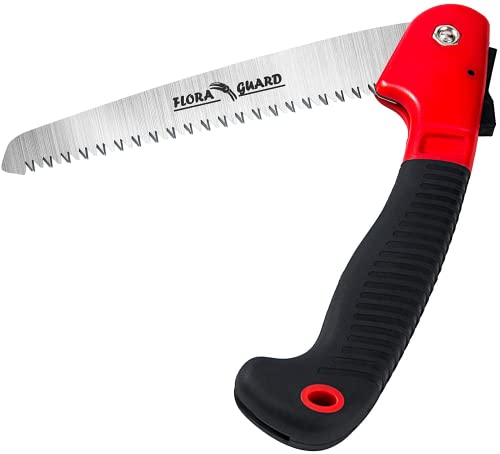
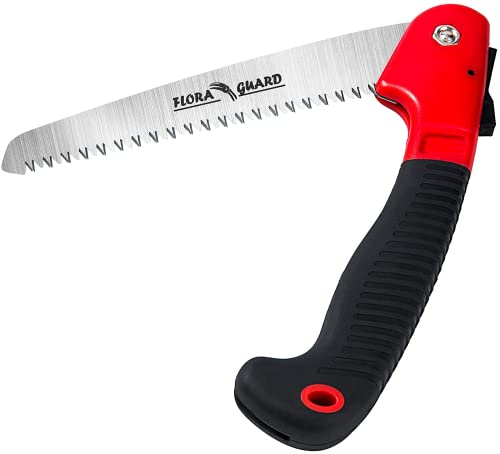
FLORA GUARD 7.7-Inch Folding Hand Saw: best for a safe, compact carry
This folding saw has a locking blade that stays firm when open and folds into the handle when closed so the teeth are enclosed, according to the listing. It has triple cut SK5 steel teeth and a textured grip, and costs around $7. At 7.7 inches it suits small limbs. Skip it if you need to cut thick branches or logs.
Samurai Ichiban 13-Inch Curved Pruning Saw: best for scabbard storage
The 13 inch blade comes with a scabbard for safe storage and transport, and the listing gives its weight as about 0.8 pounds. It costs around $50. The blade is long and sharp, so it needs respect when you use it. Skip it if you want a compact saw that folds away.

Prepare the Work Area and a Fallback Plan
Safe work starts before the saw leaves its sheath. Walk the area and look up, down and around. Remove tripping hazards, check the ground for holes and slick patches, and note where bystanders will be.
Keep a phone within reach, tell someone where you are working, and keep a small first aid kit with bandages and pressure dressings nearby. If you do get a deep cut, apply firm pressure, and get medical care when bleeding does not stop quickly. Rest when you tire, because most accidents happen late in a long session.
Safe Storage and Transport
Accidents also happen after the cutting stops. A bare blade tossed in a truck bed or hung on a nail at head height is an injury waiting to happen.
- Fold folding saws shut and engage the lock if there is one.
- Fit the blade guard or scabbard on bow saws and pruning saws before you walk anywhere.
- Carry a saw at your side with the teeth pointing down and away from your leg.
- Store saws out of reach of children, hung up or in a toolbox, and keep the blade dry to prevent rust.
Before putting the saw away, check the blade and handle again so you find damage now, not mid-cut next season. Read how to store and maintain your garden saw for storage ideas.
Frequently Asked Questions
What protective gear do I need for a hand saw?
Eye protection, work gloves, long sleeves and sturdy shoes cover most jobs. Add a hard hat for overhead work.
Is it safe to use a garden saw on a ladder?
It is risky. Avoid cutting above shoulder height from a ladder, and use a pole saw or call an arborist for high limbs.
How do I carry a garden saw safely?
Fold it closed or fit the scabbard, and carry it with the blade pointed down and away from your body.
Can a dull saw be dangerous?
Yes. A dull blade needs more force, so it jumps and slips more often. Keep the teeth sharp or swap in a new blade.
In short, how to ensure safety while using a garden saw comes down to protective gear, a plan for the cut, steady footing and knowing your limits. For more, see our saw guides and firewood cutting tips.