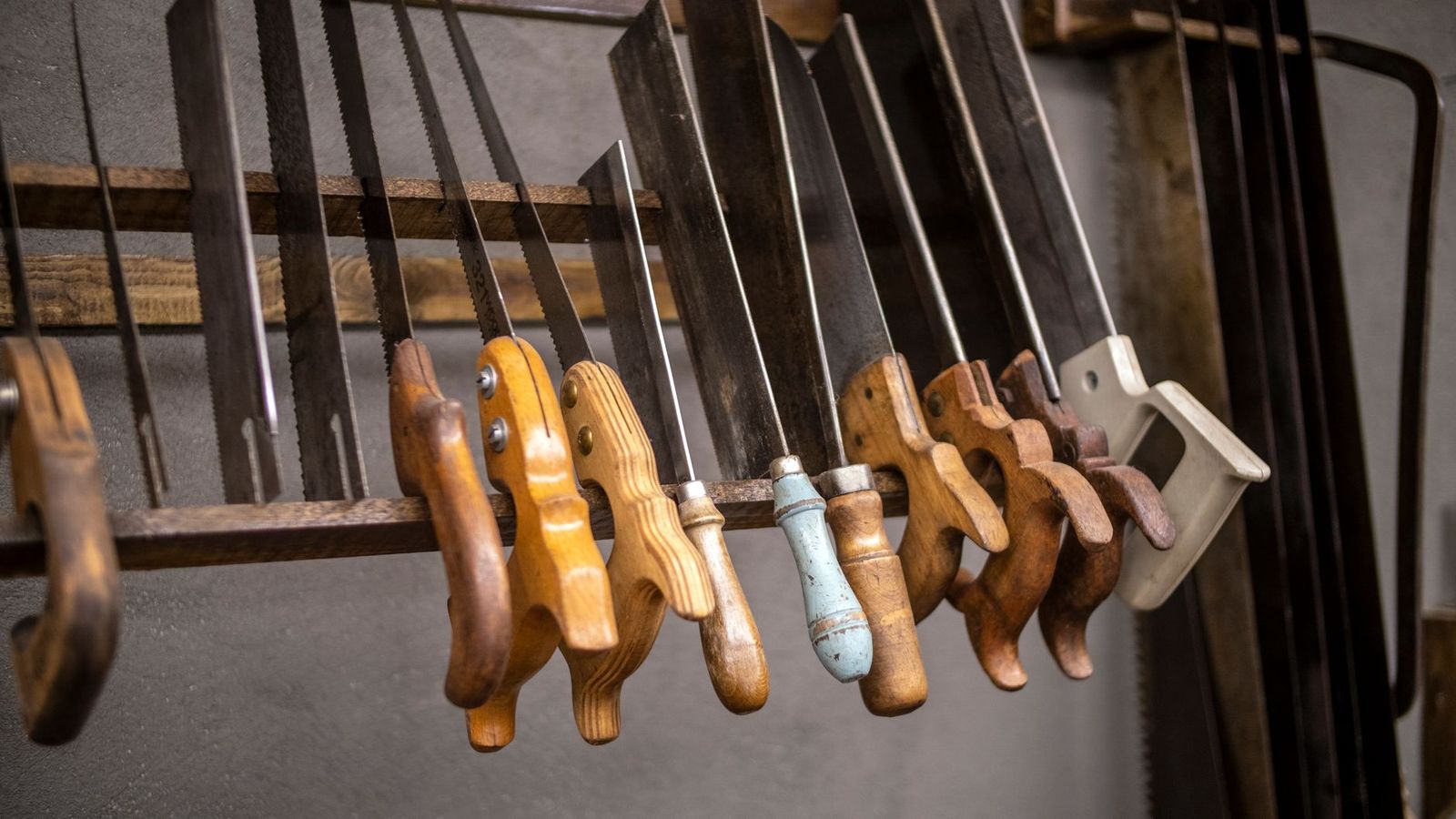
Tips for Handling and Gripping a Garden Saw Properly
Disclosure: We may earn a commission when you buy through links on this page, at no extra cost to you. As an Amazon Associate I earn from qualifying purchases. Learn more

Tips for handling and gripping a garden saw properly: a relaxed grip, straight wrist and a safe off hand.
The most important tips for handling and gripping a garden saw properly are simple: hold the handle firmly but loosely, keep your wrist straight, and always keep your other hand out of the path of the blade. A good grip gives you control, reduces fatigue and prevents the slips that cause most saw injuries.
This guide is about how you hold and carry the tool, not about cutting technique. For the technique itself, see how to use a garden saw properly, and for the stroke and cut order on specific wood, read efficient and effective cutting.

Find a Grip That Is Firm but Relaxed
Hold the handle the way you would hold a hammer, with your fingers wrapped around it and your thumb either around or alongside, whichever feels natural. The grip should be secure enough that the saw cannot twist but loose enough that your forearm does not burn after five minutes.
A tight death grip tires your arm and makes the blade chatter. Think of squeezing the handle at about 30 percent of your strength, and let your arm move the saw rather than your fingers. If your hand is going numb, loosen up, shake it out and reset.
Keep Your Wrist Straight and Your Elbow In
A neutral wrist is the best position for control and comfort. Imagine a straight line from your elbow through your wrist, hand and saw handle, and keep it there as you cut.
Bending the wrist up or down steers the blade and strains tendons. Keep your elbow close to your body, with the motion coming from your shoulder and elbow. For pull saws, you can add a second finger on the spine of the handle to guide the blade, as long as your fingers stay behind the teeth.
Control the Saw With Your Off Hand Safely
Your free hand has two jobs: steady the wood and stay out of danger. Hold the branch or board well behind the cut line, with fingers curled away from the blade path, never directly in front of the teeth.
If you need to guide the first stroke, rest your thumb knuckle against the wood, a few inches from the blade, and keep it there only for the first few light strokes. Never reach under the cut or hold the wood between your knees near the blade. When in doubt, use a clamp or have a helper hold the wood.
Choose Gloves That Improve Grip
Gloves protect against thorns, splinters and slips, but a bulky pair can cost you feel. Look for a snug fit with a textured palm, so the handle does not turn in your hand when it is wet or sappy.
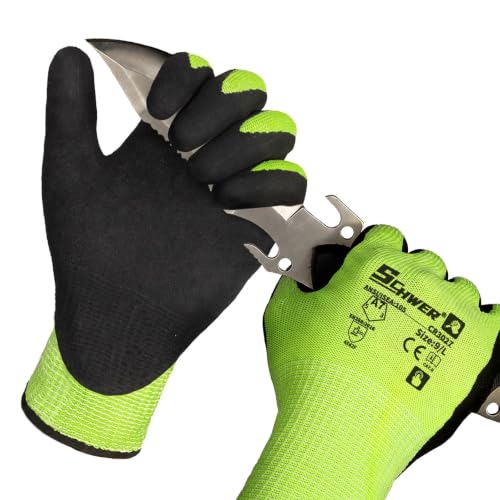
Schwer A7 Cut Resistant Work Gloves: Best for Secure Grip on Rough Work
The listing describes two pairs of ANSI A7 cut resistant gloves with sandy nitrile coating for grip, touchscreen fingertips and washable construction. They are thicker than gardening gloves, so skip them if you need maximum finger feel for delicate pruning.

Pick a Handle That Fits Your Hand
The saw itself affects how well you can grip it. Handles that are too short squeeze your fingers, and slick plastic gets dangerous when wet. Look for a rubber-coated or textured handle with room for your whole hand.
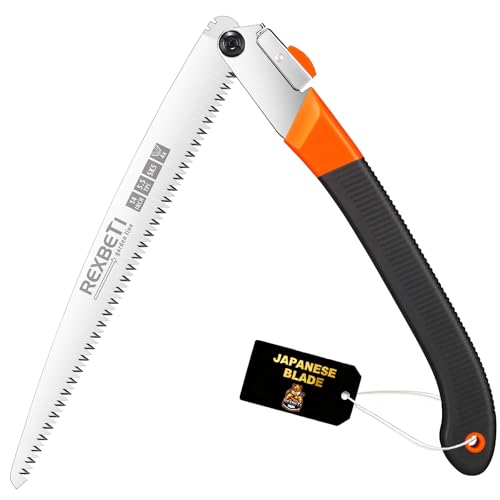
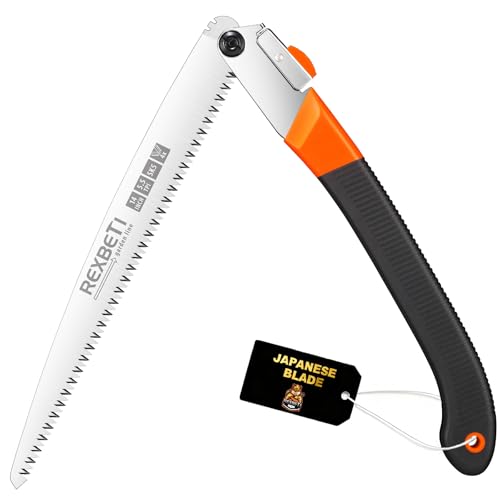
REXBETI 14 Inch Folding Saw: Best for a Long, Rubber-Coated Handle
The listing mentions an 8 inch rubber coated polymer handle intended for a firm grip in any weather. The saw is long when unfolded, so skip it if you want a compact tool for tight spaces.
Silky Bigboy 2000: Best for Grip in Wet or Cold Conditions
The handle is made from an arbor composite that the listing says provides good grip and control in wet, cold conditions, and the blade folds into a case. It is the most expensive option here, so skip it if you cut only occasionally.

Handle the Saw Safely When You Are Not Cutting
Good handling includes how you carry and set down the saw. Carry a folding saw closed or a fixed saw in its sheath, with the blade pointed down and away from your body. Never run, climb or carry a saw with the blade exposed.
When you take a break, close the blade or set the saw down in a safe place rather than leaning it against a wall or leaving it in the grass. After the job, clean and store it as described in how to store and maintain your garden saw, and read how to ensure safety while using a garden saw for the full safety routine.
Adjust Your Grip for Different Saws
A pull saw works well with a light grip and a long stroke, while a bow saw usually needs both hands, one on the handle and one steadying the frame. With a pole saw, hold the pole with both hands shoulder-width apart and keep it upright so the head does not swing toward you.
Choosing the right type for your hands matters too, so see tips for choosing the right garden saw.
Spot the Signs of a Bad Grip
Your body gives clear feedback when something is wrong. Sore forearms, blisters at the base of the fingers, numb fingertips or a saw that keeps twisting out of line all point to a grip problem.
If your forearm burns, you are probably squeezing too hard. If blisters form near the base of your fingers, the handle may be too narrow or slick, and a thin glove can help. If the blade keeps veering sideways, your wrist is likely bent, so reset your stance and keep it straight. Fix these early and you will cut longer with less discomfort.
It also helps to alternate hands for light work if you are comfortable doing so, which spreads the load. For sharp, controlled cuts, keep the blade in good shape using the tips in how to clean and maintain the blade of your garden saw.
Stay Comfortable on Longer Jobs
If you will be sawing for an hour or more, small habits make a big difference to your hands. Switch your grip slightly between cuts, shake out your fingers, and take a break before your forearm begins to ache.
Warm hands grip better and tire more slowly, so wear gloves in cold weather. Keep the handle dry and free of sap by wiping it down with a cloth, since a slick handle forces you to squeeze harder. A little attention to comfort keeps your grip steady, and a steady grip keeps the cut clean.
FAQ: Tips for Handling and Gripping a Garden Saw Properly
How tight should I hold a garden saw?
Firm enough to control it, loose enough to avoid fatigue. A light to moderate squeeze with a relaxed forearm works best.
Where should I put my other hand?
Behind the cut on the wood, fingers curled away from the blade path. Use a clamp whenever possible instead of holding small pieces.
Do gloves help or hurt grip?
A snug glove with a textured palm helps, especially when the handle is wet or sappy. Bulky gloves reduce feel, so choose a fitted pair.
How do I avoid blisters?
Do not grip too hard, use gloves and take breaks. A handle that fits your hand also makes a big difference.
To summarize these tips for handling and gripping a garden saw properly: hold it firmly but loosely, keep your wrist straight, keep your off hand clear of the blade, and carry it safely. A comfortable, secure grip protects both your hands and your cuts.