How to Cut Firewood with a Garden Saw
Disclosure: We may earn a commission when you buy through links on this page, at no extra cost to you. As an Amazon Associate I earn from qualifying purchases. Learn more

Learn how to cut firewood with a garden saw, from choosing a bow saw to supports, wedges and clean even cuts.
Learning how to cut firewood with a garden saw is a quiet, cheap way to fill a wood rack without a gas engine. A sharp hand saw will not cut as fast as a chainsaw, but it is light, safe to store and perfectly fine for branches and small logs up to about 8 inches thick.
This guide covers what a hand saw can realistically handle, how to set up the wood so it does not pinch the blade, and how to turn a pile of limbs into evenly sized rounds ready to split and season.
What a Garden Saw Can and Cannot Do for Firewood
A garden saw is best for limbs and small trunks, roughly 2 to 8 inches across, and it struggles with anything bigger. Past that size the stroke gets long and tiring, and a bigger saw or a different plan makes more sense. If you are dealing with big trunks, our guide to cutting large logs with a garden saw covers the slower, careful approach.
Three saw styles work well for this job. A bow saw has a tensioned blade and a deep cut, so it is the classic choice for logs. A long folding saw with a 12 to 14 inch blade is easier to carry into the woodlot. A Japanese style pull saw is quick on small green limbs but its thin blade can bend if you force it on bigger rounds.
Gather Gear and Pick the Right Wood
You need gloves, safety glasses, sturdy boots and long sleeves before the first cut. Add a measuring stick or a pre-cut length of branch to mark your lengths, and a chalk or pencil mark so every round comes out the same size.
Choose wood that has been standing or lying dead for a while when you can, because it is lighter and seasons faster. Green wood is easier to saw but holds a lot of water and needs a long drying time. Read more about how different species behave in how to cut through different types of wood with a garden saw.
Set Up a Safe, Stable Cutting Station
The biggest time saver is a stable support that keeps the wood from shifting or closing on the blade. A sawbuck (a simple X frame) holds logs at waist height and lets the cut-off piece fall free. If you do not have one, rest the log on a stump or on two other logs and cut between the supports.
- Never hold a log with your free hand near the cut line. Use a knee, a boot on the log, or a clamp or sawbuck instead.
- Keep the ground clear of mud, wet leaves and loose branches so your footing stays solid.
- Stand to the side of the blade path rather than directly behind it.
- Keep children and pets well away from the work area.
For a fuller checklist, see how to ensure safety while using a garden saw.
Step by Step: How to Cut Firewood with a Garden Saw
Mark the length first, then cut one round at a time in a smooth, steady rhythm. Most stoves and fireplaces take pieces between 14 and 18 inches, so measure your firebox before you start.
- Measure and mark every length along the log with chalk, working from the thicker end.
- Start the cut with a few light pull strokes using the part of the blade nearest the handle to form a groove.
- Saw with long, even strokes and let the teeth do the work. Pressing hard bends the blade and slows you down.
- Watch the kerf (the gap behind the blade). If it starts to close, the log is pinching. Stop, slide a small wedge into the cut and keep going.
- Slow down in the last inch so the round does not split off and tear a strip of bark.
- Roll the log forward to your next mark and repeat.
What to Do When the Blade Binds
A pinched blade means the wood is bending under its own weight and squeezing the cut. Stop sawing, support the free end, and open the kerf with a wedge or by cutting from the opposite side. Forcing a bound blade is how teeth get bent and handles get cracked.
Choose a Saw That Matches the Job
For a pile of limbs and short logs, a bow saw in the 24 to 30 inch range is the most comfortable pick. Match the blade to your wood: green wood blades have wider tooth gaps that clear wet sawdust, while dry wood blades have finer teeth for a cleaner, faster cut.
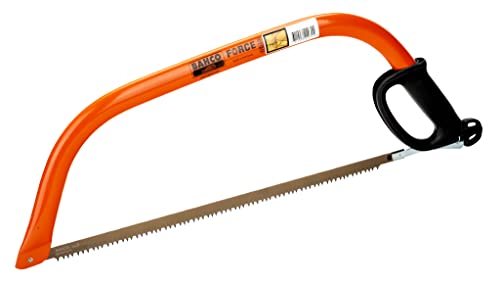
Bahco 10-30-23 30-Inch Ergo Bow Saw: best for green wood
This 30 inch bow saw is listed as designed for green wood, with a tensioning mechanism meant to keep the blade tight and cutting straight, and a lightweight steel tube frame. It is priced around $44. The frame is bulky to carry through brush, so it is better for a cutting station than for a hike. Skip it if most of your wood is fully dry, where the dry wood version suits better.

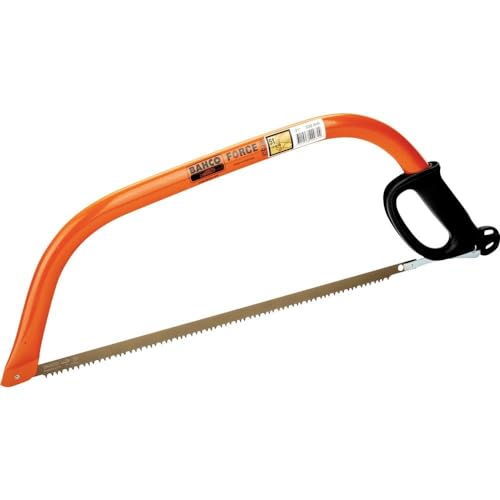
Bahco 10-30-51 30-Inch Ergo Bow Saw: best for dry wood and lumber
The same size and frame as above, but listed for dry wood and lumber, which is what most seasoned firewood lengths are. It sells for around $44. The finer teeth can load up with sap in fresh wood, so it is the wrong choice for green limbs. Skip it if you mostly cut freshly fallen trees.

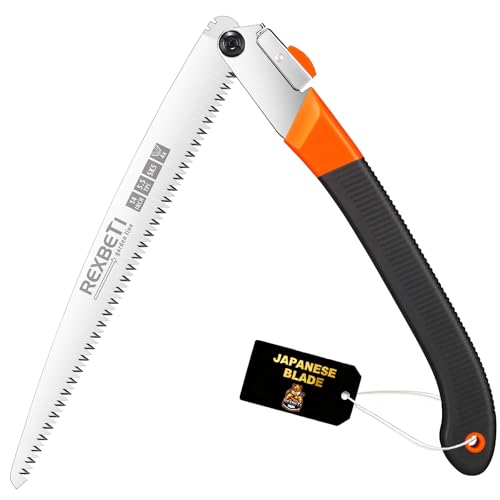
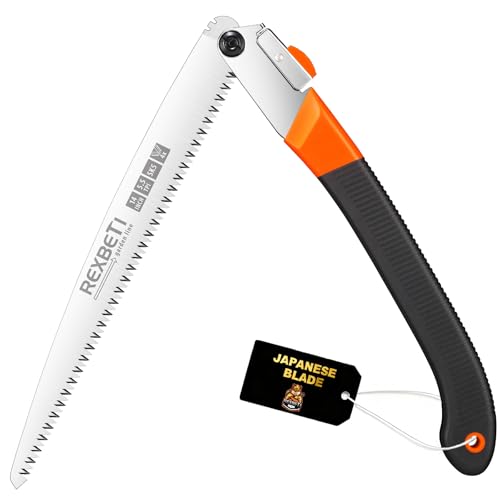
REXBETI 14-Inch Folding Pruning Saw: best for hauling into the woods
This folding saw has a 14 inch SK5 steel blade with staggered teeth and is listed for branches up to about 7 to 10 inches across. It weighs only 14.5 ounces and folds to 14 inches, and costs around $25. A thin folding blade needs a lighter touch on large rounds. Skip it if you want one saw for everything at a fixed cutting station, where a bow saw gives more control.
Stack and Season the Wood
Split larger rounds and stack them off the ground in a single row with air gaps so the wood dries evenly. Cover only the top of the stack, leaving the sides open to the wind. Most hardwoods need many months of drying before they burn cleanly, and a moisture meter takes the guesswork out.
When the work is done, wipe resin off the blade and store the saw dry. Our guides on cleaning and maintaining the blade and storing your garden saw keep it ready for next season.
Frequently Asked Questions
Can a garden saw cut firewood fast enough to be practical?
Yes, for a few cords of small wood or a winter supply of limbs it is practical. A 6 inch round may take a couple of minutes with a sharp blade. For large trunks or several cords, most people reach for a chainsaw.
What size saw is best for firewood?
A 24 to 30 inch bow saw or a 14 inch folding saw covers most jobs. Longer blades take fewer strokes per cut, but they are heavier and harder to control on small limbs.
Is it better to cut firewood green or dry?
Green wood saws more easily but needs a long season before burning. Dry wood is harder on the teeth in some species but ready sooner. Cutting green and seasoning it yourself is the usual plan.
How do I keep my saw from getting stuck?
Support the log so the cut stays open, use a wedge if the kerf narrows, and keep a steady rhythm without leaning on the saw. A waxed or cleaned blade also slides more easily.
Now you know how to cut firewood with a garden saw: support the wood, mark your lengths, saw with long even strokes and keep the blade clean. For more technique, browse our saw guides and the safety gear section.