Tips for Cutting Large Logs with a Garden Saw
Disclosure: We may earn a commission when you buy through links on this page, at no extra cost to you. As an Amazon Associate I earn from qualifying purchases. Learn more

Tips for cutting large logs with a garden saw: raise and secure the log, use a long blade and prevent pinching.
The best tips for cutting large logs with a garden saw are about support and leverage rather than muscle: a log that rolls, pinches the blade or sits too low turns a simple job into a hard one. A garden saw can handle logs, but it works best when you let gravity and a long blade do most of the effort.
This guide covers log support, blade choice, preventing pinching and a safe cutting order. For thick branches that are still on the tree, see tips for cutting thick branches, and for firewood sizing read how to cut firewood with a garden saw.

Know What a Hand Saw Can and Cannot Handle
A hand saw suits logs up to around the length of its blade, and beyond that the work gets slow and tiring. A 24 to 30 inch bow saw handles logs about 8 to 12 inches across with patience, while a 14 inch folding saw is better kept for logs under about 7 inches.
If a log is much thicker than that, or wedged, rotten or under tension, think about a different approach, such as splitting it or calling a professional. Never cut a log that is under a heavy load, since it can spring when the cut opens.
Raise and Secure the Log
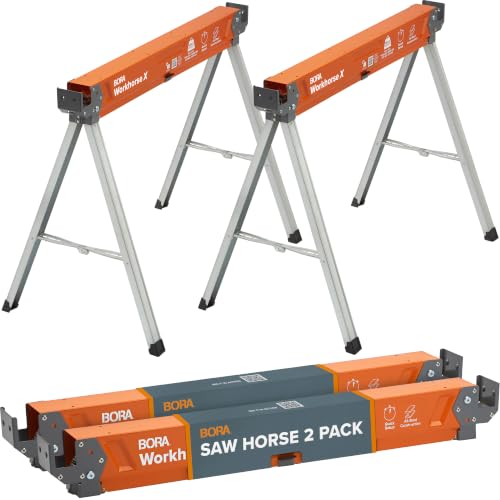
Support is the single biggest factor in cutting logs comfortably. Place the log across a sawhorse or in a sawbuck, the X-shaped rack made for this job, so it sits at about knee to hip height and does not roll.
Chock the log with a wedge or a block if it wants to move, and never hold it with your foot or hand near the cut. The BORA Workhorse X is listed as a two pack of folding heavy duty metal sawhorses, which gives you two stable supports for longer logs. They are an extra expense, so skip them if you cut logs rarely and can use a sturdy stump or rack instead.

Pick a Long Blade With Aggressive Teeth
For logs, blade length and tooth style matter more than brand. A bow saw is the classic tool because the thin blade cuts fast and the frame holds tension, so the cut stays straight through wide wood.
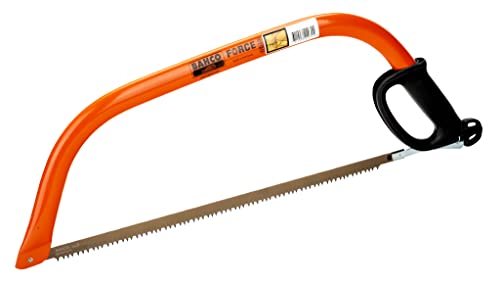
Bahco 30 Inch Ergo Bow Saw: Best for Green Logs
The listing says it is designed for green wood and uses a tensioning mechanism to hold high blade tension for straight cuts, with a lightweight steel tube frame. It will be slower on dry, hard wood, and the frame limits how thick a log you can cut. Skip it if your logs are mostly seasoned hardwood.

Fiskars 24 Inch Bow Saw: Best for Softer Logs and Easy Handling
This 70 cm bow saw is described as a log saw for soft wood and large branches, with a finger guard handle, blade guard and replaceable blade. At 24 inches it reaches a smaller diameter than a 30 inch frame, so skip it for very wide logs.

Use the Right Cutting Order to Avoid Pinching
Pinching happens when the cut closes on the blade as the log sags. Think about which way the wood will move before you start, and cut so the gap opens rather than closes.
If the log is supported at both ends, cut from the top and stop before the blade reaches the bottom third, then flip the log or finish from underneath. If it is supported at one end only, cut from the underside first for a short distance, then finish from the top. A plastic or wooden wedge tapped into the kerf keeps it open. Keep the strokes long and smooth, using the full length of the blade.
Cut With Posture and Pace, Not Force
Stand with your feet apart, keep the log between you and the work, and let your whole arm swing rather than your wrist alone. Rest every few minutes, since fatigue is when slips happen.
Keep the blade clear of sap and sawdust, because buildup slows a long cut dramatically. Our guide on cleaning and maintaining the blade shows how. Wear gloves and eye protection, and keep other people and pets away. See how to ensure safety while using a garden saw for the full checklist.
Plan the Cuts Before You Start
Decide how long each piece should be and mark the cuts before you begin. For firewood, stove-length pieces are usually shorter than you would guess, and measuring against your stove or fire pit saves recutting.
Cut the thick end first when the log tapers, so the weight shifts less. For general technique on different species, read how to cut through different types of wood with a garden saw.
Stay Safe Around Heavy Wood
Logs are heavy and unpredictable, so safety habits matter more here than with small branches. Wear gloves, eye protection and sturdy boots, and keep your feet clear of the line where an offcut will fall.
Never cut toward your legs, and do not stand directly beneath a log that might slip off its supports. If the saw sticks, stop and reassess instead of yanking on the handle. Take the weight off the cut by lifting the end, or use a wedge to open the kerf. Keep children and pets away from the work area until the pieces are cleared and stacked.
Finally, stack cut logs on a base off the ground so they dry and are easy to reach. For long-term care of your tool after a heavy job, see how to store and maintain your garden saw.
Splitting and Sizing Logs After the Cut
Once a log is cut to length, the next step depends on its use. For firewood, wide rounds usually need splitting before they burn well, and many people cut them a little shorter than their stove requires so they fit easily.
For garden uses, such as stump seats, raised bed edging or stepping stones, cut the rounds to a consistent thickness and set them on level ground. Sealing the ends with a wood preservative can slow cracking and rot, following the product's directions. Whatever the plan, stack the finished pieces off the ground in a place with good airflow.
If a log is too wide for your saw to cut in one pass, work from two sides. Cut as deep as you can from the top, roll the log a half turn on its supports, and meet the first cut from the opposite side. Match the grooves carefully so the two cuts line up in the middle.
FAQ: Tips for Cutting Large Logs with a Garden Saw
How thick a log can I cut with a garden saw?
A 24 to 30 inch bow saw can manage logs up to about a foot across with patience. Beyond that, the job gets slow and a chainsaw or a professional may be more practical.
Why does my saw keep getting stuck in the log?
The log is likely sagging and closing the cut. Support the wood properly, cut so the gap opens, and use a wedge to hold the kerf apart.
Is a bow saw or a folding saw better for logs?
A bow saw is better for most logs because its long blade and tensioned frame cut faster and straighter. A folding saw is fine for smaller rounds.
Should I cut green or dry logs?
Green wood is softer but sticky with sap, while dry hardwood is tougher on teeth. Use a blade made for your wood type and clean it often.
Keep these tips for cutting large logs with a garden saw in mind: support the log, choose a long blade, cut so the gap opens, and take breaks. With the right setup, even a heavy log comes apart steadily.