How to Cut through Different Types of Wood with a Garden Saw
Disclosure: We may earn a commission when you buy through links on this page, at no extra cost to you. As an Amazon Associate I earn from qualifying purchases. Learn more

How to cut through different types of wood with a garden saw: blade and stroke choices for green, dry, soft and hard wood.
Knowing how to cut through different types of wood with a garden saw saves effort and keeps your blade in good shape. Green maple, dry oak, sappy pine and a soggy old limb all behave differently, and the right stroke and blade choice change a frustrating job into a smooth one.
This guide sorts wood by condition and density, then explains what to adjust for each: blade, stroke pressure, speed and how often to clear the cut.

Green Wood Versus Dry Wood
Green wood is wet and fibrous, so it cuts easily but clogs the teeth with damp sawdust. Dry wood is firmer and cuts cleanly but wears the blade faster and needs more pressure on the pull stroke.
For green limbs, pick a blade with wide tooth gaps (gullets) that eject wet chips, and clear the cut every few strokes. For dry wood, use finer, sharper teeth and a lighter touch. Blades marked for one or the other are common on bow saws; our guide on choosing the right blade for your garden saw explains the tooth patterns.
Softwoods: Pine, Spruce, Cedar and Fir
Softwoods saw quickly because the fibers are loose, but they gum up with resin. A fast, coarse tooth pattern gives the best speed, and a quick wipe of the blade with a cloth keeps it running free.
- Use long, light strokes. The saw wants to run fast, so let it.
- Pause to clear resin from the teeth when the cut starts to drag.
- Expect a rougher surface on the cut face. A sharp blade and a slow finishing stroke minimize splintering.
The sticky buildup is easy to deal with if you follow how to clean and maintain the blade of your garden saw.
Hardwoods: Oak, Maple, Hickory and Ash
Dense hardwoods take patience, not force. The cut will be slow, and leaning on the saw only bends the blade and wanders off the line.
Use a sharp blade with fine to medium teeth, mark a clear starting line, and take short starter strokes before lengthening. If the saw feels like it is skating, the teeth are probably dull. A fresh blade matters most on hardwoods. Pull saws that cut on the draw stroke are especially good here because the thin blade removes less wood per pass.
Cutting Dry Hardwood Limbs
Dry hardwood can be harder than it looks, and cracks run along the grain. Support both sides of the cut so the limb does not split as it drops, and finish with light strokes.
Wet, Rotten and Knotty Wood
Wet, punky wood crumbles and clogs the blade, while knots are the hard spots that stop a cut. Treat them as special cases.
- Rotten wood: saw lightly and avoid twisting. Often a pry or a shallower cut works better than a full pass.
- Knots: slow down, use short strokes and keep the blade straight. Try to cut next to a knot, not through it, when you have the choice.
- Frozen wood: it is brittle and tough on the teeth. Let it warm or work gently to avoid chipped teeth.
How to Cut Through Different Types of Wood with a Garden Saw by Size
Match the saw to the diameter before you match it to the species. Thin branches under 2 inches suit a folding or pruning saw, while thicker limbs and small logs suit a bow saw. See tips for cutting thick branches when the limb is bigger than your hand can circle.
For firewood lengths, read how to cut firewood with a garden saw, which covers supports, wedges and stacking.
A Universal Technique for Any Wood
These steps work whatever the species, and the adjustments above sit on top of them.
- Support the wood so the cut stays open.
- Start with short pull strokes to set a groove.
- Use the full length of the blade and keep a steady rhythm.
- Let the weight of the saw, not your arm, do the pushing.
- Slow down at the end so the last fibers do not tear.
Always wear gloves and eye protection, keep the free hand away from the cut line and read how to ensure safety while using a garden saw before tackling dense wood.
Saws That Suit Different Wood
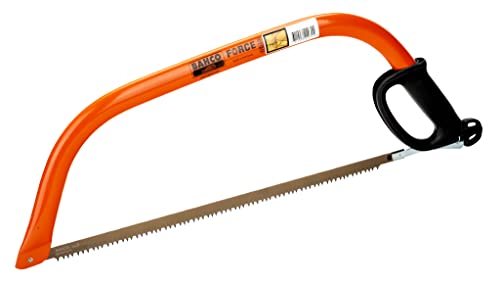
Bahco 10-30-23 30-Inch Ergo Bow Saw: best for green wood
Listed as designed for green wood, this 30 inch bow saw has a tensioning mechanism intended to hold the blade tight for straight cuts. It costs around $44. It is a larger tool, so carrying it around the yard takes more room. Skip it if you mostly cut fully seasoned lumber.

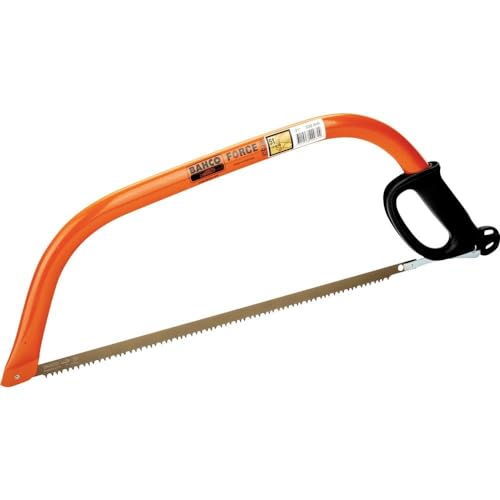
Bahco 10-30-51 30-Inch Ergo Bow Saw: best for dry wood and lumber
This version of the same frame is listed for dry wood and lumber, so the teeth suit seasoned oak, maple and cut stock. It sells for around $44. Fresh, sappy wood can clog finer teeth faster. Skip it if your supply is mostly green branches.

Samurai Ichiban 13-Inch Curved Pruning Saw: best for hardwood limbs
This 13 inch curved blade has taper ground teeth with impulse hardening and a listed 6.5 teeth per inch, and it comes with a scabbard. It costs around $50. The blade is built for limbs, not big logs. Skip it if you need to cut anything much thicker than a thick branch.

Reading the Wood Before You Cut
A quick look at the wood tells you what to expect. Tight, heavy grain and a dull ring when you tap it point to dense hardwood, while a light weight and visible resin point to softwood. Bark that peels away easily and a damp, musty smell suggest rot.
Check the ends for cracks and the limb for knots, bends and tension. A bent limb pinches the blade on the inside of the curve, so cut from the compression side first when you can. Spending thirty seconds on this step saves a lot of binding and sore wrists later.
Keeping Your Blade Sharp Across Species
Every wood type wears teeth at a different rate. Dense, dry hardwood and dirty bark dull a blade fastest, while clean softwood is gentle. Soil and grit on the bark act like sandpaper, so brush off logs that have been lying on the ground before you saw.
When the saw starts to feel slow or the cut face looks fuzzy and burned, stop and check the teeth. File the teeth if your blade allows it, or fit a new blade if the teeth are hardened. Rotating between two blades, one for green wood and one for dry wood, extends the life of both and makes each cut easier. Our guide to maintaining and sharpening your garden saw covers filing step by step.
Frequently Asked Questions
Is it harder to cut green or dry wood by hand?
Green wood is usually easier on the arms but clogs the blade, while dry hardwood is harder to push through. Use a wide-gap blade for green wood and a sharp, finer blade for dry.
Why does my saw skip or wander in hardwood?
Usually the teeth are dull or you are pressing too hard. Sharpen or replace the blade, make a clear starter groove and let the saw cut on its own weight.
How do I stop pine sap from sticking to the blade?
Wipe the blade with a rag as you go, and clean off resin after the job. Sap that is left on dries hard and makes later cuts harder.
Can one saw handle every wood type?
A mid-range pruning saw handles most limbs, but a dedicated green wood or dry wood blade does better on logs. Pick what matches the wood you cut most.
To sum up how to cut through different types of wood with a garden saw: choose a blade for the moisture and density, keep the cut open and clear the teeth when they load up. Explore more in our saw section.