How to Use a Garden Saw for Pruning Shrubs and Hedges
Disclosure: We may earn a commission when you buy through links on this page, at no extra cost to you. As an Amazon Associate I earn from qualifying purchases. Learn more

How to use a garden saw for pruning shrubs and hedges: renewal cuts, thinning and timing for thick stems.
Many gardeners reach for shears first, but knowing how to use a garden saw for pruning shrubs and hedges solves the jobs shears cannot do: old woody stems, overgrown centers and thick trunks at the base. A slim pruning saw slips between stems without damaging neighbors.
This guide explains when a saw is the right tool on shrubs, how to renew an overgrown plant, how to deal with hedges and what to do about timing and aftercare.
When a Saw Beats Shears and Loppers
Use a saw when a stem is thicker than about an inch and a half, or when it sits deep inside the plant where loppers cannot open. Shears and hand pruners are fine for young growth, while loppers handle stems up to roughly two inches. Visit our pruners and loppers section for those.
A narrow, curved pull saw can reach into dense lilac, forsythia, viburnum or privet and cut a single stem at ground level. The cut is clean, which helps the plant recover.
How to Use a Garden Saw for Pruning Shrubs and Hedges: Timing
The best moment depends on when the shrub flowers. Prune spring bloomers, like lilac and forsythia, right after they flower, because they form buds on last year's wood. Summer bloomers can be cut in late winter, before new growth starts. Evergreens usually tolerate pruning in early spring.
Avoid heavy cuts late in the season, since new growth may not harden before frost. Always check your plant's requirements first.
Step by Step: Renewing an Overgrown Shrub
Renewal pruning replaces old stems gradually, so the shrub stays healthy and full.
- Look over the plant and pick out the oldest, thickest and weakest stems.
- Remove dead and broken wood first, cutting back to a healthy bud or to the base.
- Cut about a third of the oldest stems at ground level with the saw. Make a clean, slightly angled cut.
- Thin crossing or crowded stems so light and air reach the center.
- Repeat over the next two seasons to renew the whole plant.
Cutting Close to the Ground
Get the blade low, angle it slightly and use short pull strokes to start the groove. Hold the stem away from neighbors with your free hand above the cut, not below it, and watch for thorns. For stem technique, read how to make precise cuts with a garden saw.
Using a Saw on Hedges
Hedge saws and pruning saws are for the thick, old growth that electric trimmers and shears cannot cut. Trim the surface with hedge shears, then use the saw to cut out thick stems and reduce a hedge that has grown too wide.
- Cut thick stems back inside the hedge to a side branch or to the ground.
- Taper the hedge so the base is wider than the top, to keep sun reaching the lower leaves.
- Do not cut deep into bare, leafless wood on conifers, because many do not regrow from old wood.
- Work in stages over several years for a severely overgrown hedge.
Picking a Saw for Shrub Work
A compact pull saw with a narrow blade is easiest in tight growth. A blade that cuts on the pull stroke with a curved profile gives control, and a locking or scabbard design keeps it safe in a pocket or on a belt.
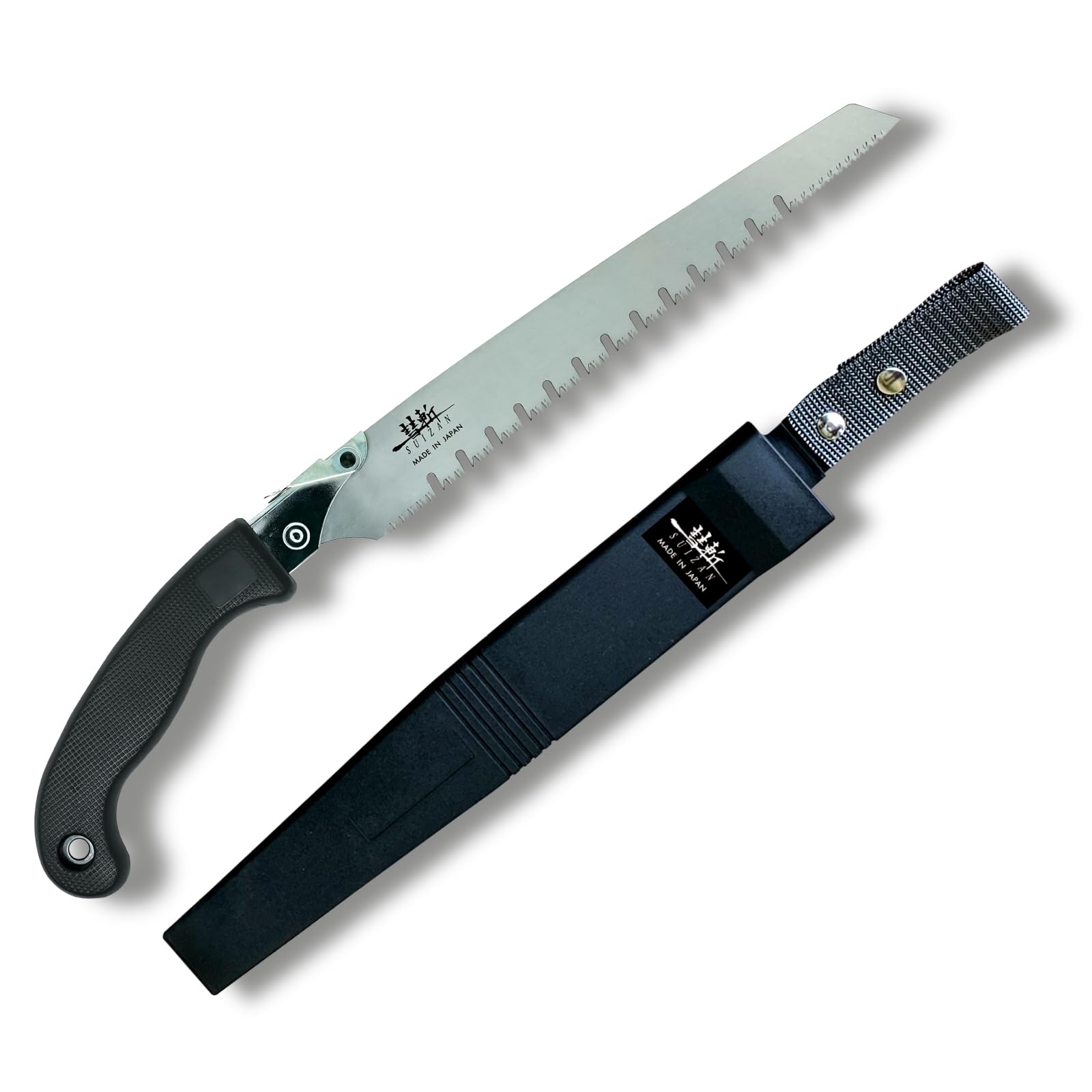
SUIZAN 10.6-Inch Pruning Saw: best for reaching between stems
The listing says this Japanese pull saw has a slim blade that reaches between branches where a bow saw cannot, with gullet teeth that clear sawdust. It cuts stems up to about 6 inches and the blade is replaceable. It weighs about 6 ounces and costs around $36. A thin blade is not for twisting. Skip it if you want a folding model that fits a pocket.

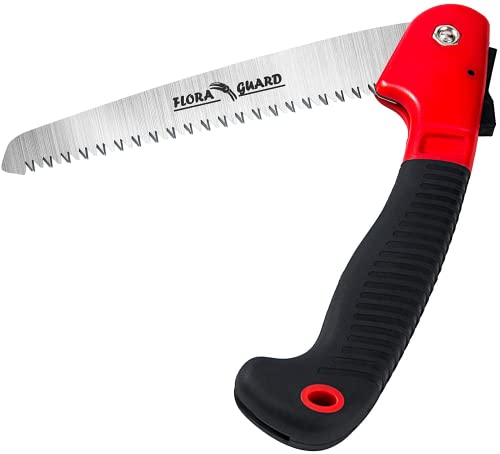
FLORA GUARD 7.7-Inch Folding Hand Saw: best for a pocket sized backup
This small folding saw has a triple cut SK5 blade that locks open and folds into the handle. It is listed for branches up to about 4 inches thick and costs around $7. The short blade needs more strokes on thicker stems. Skip it if you regularly cut stems thicker than a couple of inches.
Aftercare
Rake up cuttings, and water and mulch the plant lightly to help it recover. Avoid heavy feeding right after hard pruning. Clean the blade between plants, especially if you saw diseased wood, and dry it before storage. Our blade care guide covers sap removal. For larger woody plants, see how to prune trees with a garden saw.
Shaping Without Making Things Worse
Shrubs look best when they keep a natural form, so cut to a side branch or bud rather than shearing everything flat. Heading cuts shorten a stem and encourage bushy growth just below the cut, while thinning cuts remove a whole stem and open up the plant.
Step back after every few cuts and look at the overall shape. It is easy to remove more than you meant to, and wood does not grow back onto a bare stub. For a formal hedge, set a string line at the target height, trim to it and check the sides for an even taper.
Tools to Pair with Your Saw
A saw is one tool in a pruning kit. Bypass pruners handle green stems up to about half an inch, loppers take stems up to around two inches, and shears keep the surface of a hedge tidy. The saw covers everything thicker and everything buried deep in the plant.
Keep a bucket or tarp nearby to collect cuttings, and wear gloves that cover your wrists, especially around roses, barberry or holly. Sharp tools make clean cuts that close fast, so look at maintaining and sharpening your garden saw and keep your pruners sharp too. A little preparation turns a miserable scratchy job into a quick one.
Common Mistakes on Shrubs and Hedges
The most frequent error is cutting at the wrong time of year and removing next season's flower buds. The second is shearing a hedge flat on top so that sunlight never reaches the bottom, which leaves bare, leggy lower branches.
Also avoid leaving stubs, since they die back and look untidy, and avoid cutting more than a third of the plant in a single year. If a shrub has been neglected for many years, spread the renewal over three seasons.
Finish by cleaning up. Collect the thick cuttings for the brush pile or yard waste, and dispose of any diseased stems instead of composting them. Check the plant again in a few weeks: new shoots from the base show that renewal is working, and you can then plan the next third of old stems for the following year.
Frequently Asked Questions
Can I prune hedges with a hand saw?
Yes, for thick old stems and renovation. Use shears or a trimmer for the surface and a saw for heavy wood.
When should I prune shrubs?
Spring bloomers right after flowering, summer bloomers in late winter. Evergreens are usually fine in early spring.
How much can I cut off at once?
Remove up to about a third of old stems in a season. Take the rest over later years.
Should I be worried about thorns?
Wear thick gloves and long sleeves, and hold stems well above the cut. Thorny shrubs need extra care.
With the right saw and timing, how to use a garden saw for pruning shrubs and hedges becomes simple: cut old wood low, thin the center and take your time. See more in our saw guides and how to use a garden saw properly.