How to Use a Garden Saw Properly
Disclosure: We may earn a commission when you buy through links on this page, at no extra cost to you. As an Amazon Associate I earn from qualifying purchases. Learn more

How to use a garden saw properly: stance, grip, starting a cut and long even strokes without binding.
Many people pick up a hand saw and push as hard as they can, which is exactly the wrong approach. Learning how to use a garden saw properly means working with the blade, not against it: a good grip, a steady stance, long relaxed strokes and a few starting tricks.
This guide is the starting point for beginners. It covers the parts of a saw, how pull and push saws differ, the basic stroke and the common mistakes that cause bent blades, wandering cuts and sore arms.

Know Your Saw
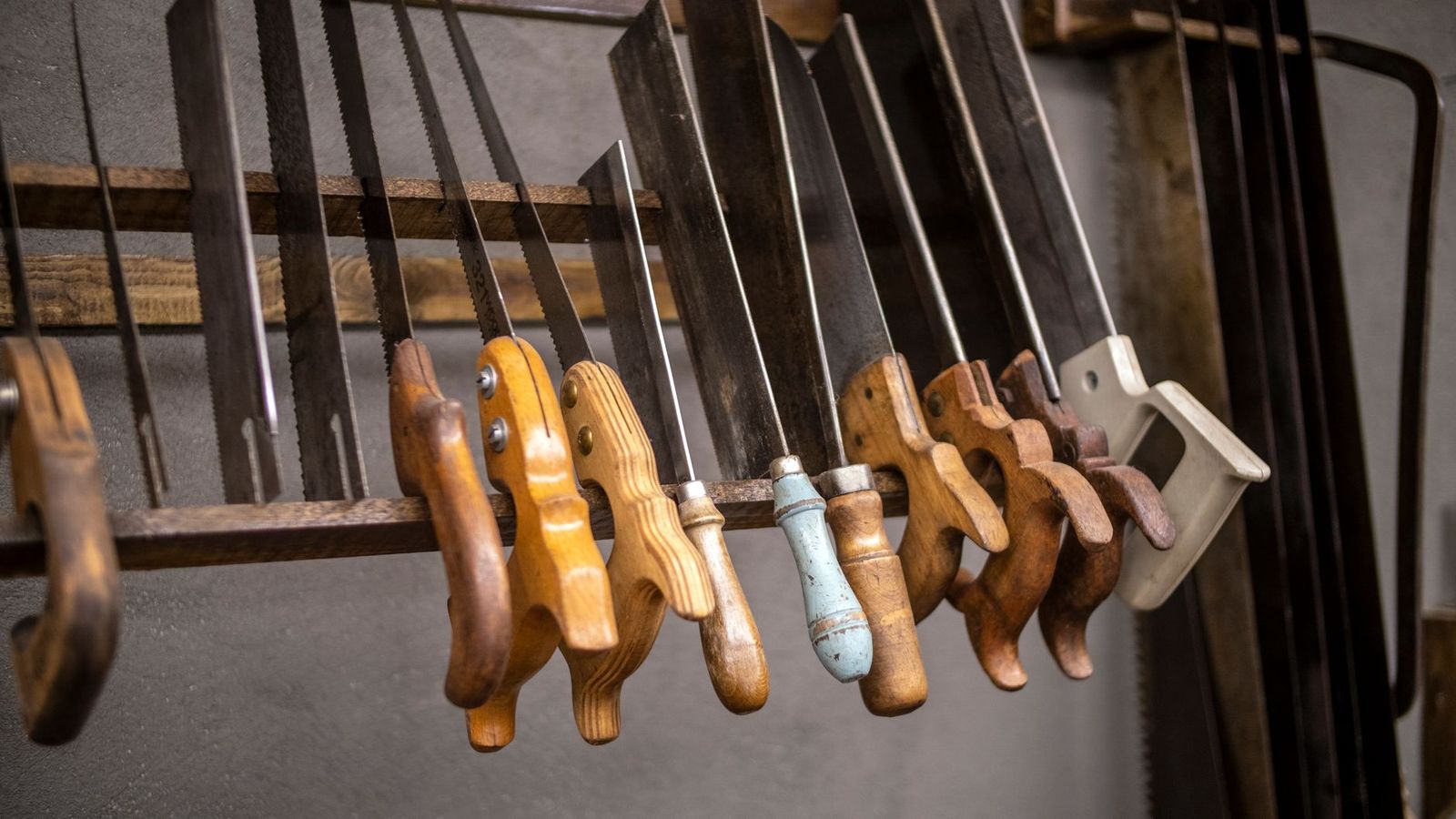
Most garden saws fall into three types, and each is used a little differently. Pruning saws, often curved, cut on the pull stroke. Folding saws are compact and may cut on either stroke depending on tooth design. Bow saws have a tensioned blade and cut on both push and pull.
The teeth near the handle are the strongest and the ones you will use most. The tip is thinner and good for small stems. Read tips for choosing the right garden saw if you are still deciding which one you need.
Set Up Your Stance and Grip
Stand with feet shoulder width apart, knees slightly bent and your weight balanced. Hold the handle with a firm, relaxed grip, like a handshake, with your index finger along the handle for control. Detailed grip tips are in handling and gripping a garden saw properly.
Keep your free hand clear of the cut line. Hold the branch above the cut or support it. Never saw toward your own hand or leg. Wear safety glasses and gloves, as covered in how to ensure safety while using a garden saw.
How to Use a Garden Saw Properly: The Basic Technique
A good stroke uses the full length of the blade with even pressure. A tense, short, choppy stroke wears out your arm and the teeth.
- Mark the cut with a pencil, or note a point on the bark.
- Rest the blade on the mark with the teeth near the handle, and draw it back a few times with light pressure to start a groove.
- Lengthen the stroke and apply gentle pressure only on the cutting direction. On a pull saw, pull firmly and return lightly.
- Let the weight of the saw do the work. If you press hard, the blade bends and wanders.
- Slow down as you near the end so the wood does not split or tear bark.
- Catch the cut-off piece or let it fall clear.
Starting a Cut Without Slipping
Slip happens when the blade skates across bark. Nick the surface with a few short pulls, using your thumb knuckle as a guide only if the blade is moving away from your hand, never toward it. A clean groove keeps the blade in place.
Support the Wood and Control the Cut
Support is half of good sawing. If the branch sags, it closes on the blade. For thicker pieces, follow the underside cut then top cut method described in how to prune trees with a garden saw.
If the blade pinches, stop, support the limb and open the cut with a wedge. When you need a particular line or angle, see how to make precise cuts.
Common Mistakes to Avoid
- Pressing too hard: a dull blade needs sharpening, not force.
- Using a short blade on a thick limb: a bigger saw cuts faster with less effort.
- Twisting the blade in the cut: this bends or snaps teeth, especially on thin blades.
- Skipping cleanup: sap and dirt dull teeth and cause rust.
- Cutting while off balance, on a ladder or in poor light.
A Good First Saw
For general yard work, a folding saw with a lock and a medium blade is a practical starter. Use a bigger bow saw if you plan to cut logs.
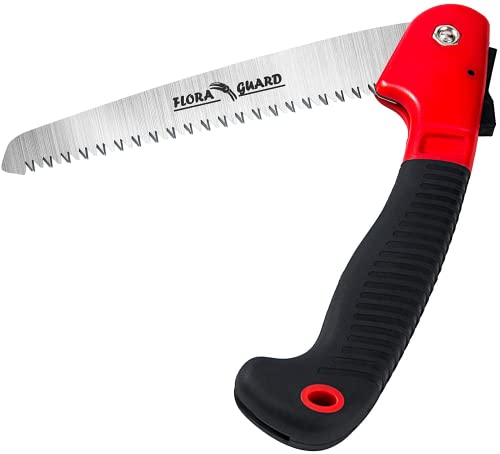
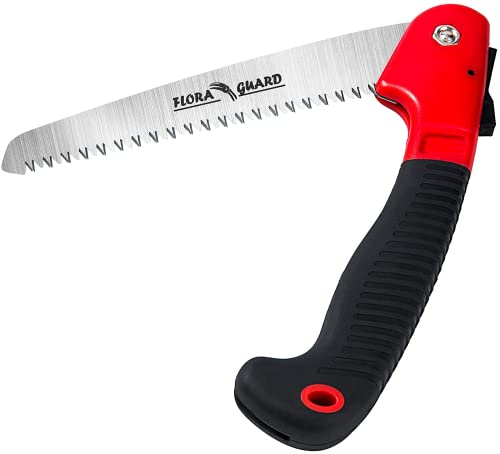
FLORA GUARD 7.7-Inch Folding Hand Saw: best for a low cost starter
This folding saw has triple cut SK5 teeth, a locking blade and a textured grip, and the listing says it handles branches up to about 4 inches thick. It costs around $7. The short blade takes more strokes on bigger limbs. Skip it if you mostly cut large branches or logs.
Samurai Ichiban 13-Inch Curved Pruning Saw: best for a step up in cutting speed
This 13 inch curved blade has 6.5 teeth per inch with hardened teeth, comes with a scabbard and weighs about 0.8 pounds. It costs around $50. It is a fixed blade, so storage takes more thought. Skip it if you want something that folds into a pocket.

After the Job
Wipe off sap and dirt, dry the blade and store it with a guard or folded. Regular care keeps a saw sharp for years. Read how to clean and maintain the blade and how to maintain and sharpen your garden saw.
Practice on Scrap Wood First
If you are new to hand saws, a few practice cuts on scrap branches make a real difference. Clamp or brace a dead limb and practice starting a groove, keeping the blade square and finishing without tearing the end.
Try cutting along a pencil line to build control, then repeat with the blade tilted slightly to feel how the angle changes the cut. Count your strokes: a good saw should cut a branch of a couple of inches in well under a minute. If it takes far longer, the blade is dull or you are bending it by pressing too hard. After ten minutes of practice most people find the rhythm and their arms stop tiring so quickly.
Choosing the Right Saw for the Job
Using a saw well also means using the right saw. A short folding blade is great for twigs and thin branches but tiring on a thick limb, and a bow saw is fast on logs but clumsy in a tree crown.
- Branches under 2 inches: folding saw or short pruning saw.
- Branches 2 to 6 inches: curved pruning saw with a 10 to 14 inch blade.
- Logs and firewood: bow saw.
- High limbs: pole saw from the ground, never a ladder with a hand saw.
If you cut mostly the same material, choose the blade for it. Our guide on choosing the right blade has details.
Keeping Control on Awkward Cuts
Not every cut is flat and easy. When a branch sits at an angle, find a stable stance first and brace your forearm so the blade tracks straight. For cuts at shoulder height or above, use a pole saw or call a professional, since reaching overhead tires the arms and invites slips.
Take a short rest when your forearm feels tight. A relaxed grip and a calm rhythm will always beat speed, and you will find the saw cuts better when you stop fighting it.
Frequently Asked Questions
Should I push or pull a garden saw?
Pruning saws and most folding saws cut on the pull stroke, while bow saws cut both ways. Check your saw and put your effort into the cutting direction.
Why does my saw keep getting stuck?
The branch is probably closing on the blade or the teeth are dull. Support the wood, open the cut with a wedge and sharpen or replace the blade.
How hard should I press?
Very lightly. A sharp saw cuts with its own weight and long strokes.
Can I use one saw for everything?
A mid-size folding saw covers many jobs, but logs and thick limbs go better with a bow saw.
The key to how to use a garden saw properly is simple: stable stance, relaxed grip, long strokes and patient cutting. For more, see our saw guides and how to cut firewood.